
Making sense of menopause, together.
- Connect with women who get it
- Get expert-reviewed resources
- Learn from real women's experiences
Powered By



 Medically reviewed by
Sarah Nadarajah, WHNP, MSCP
·
Written by
Suzanne Mooney
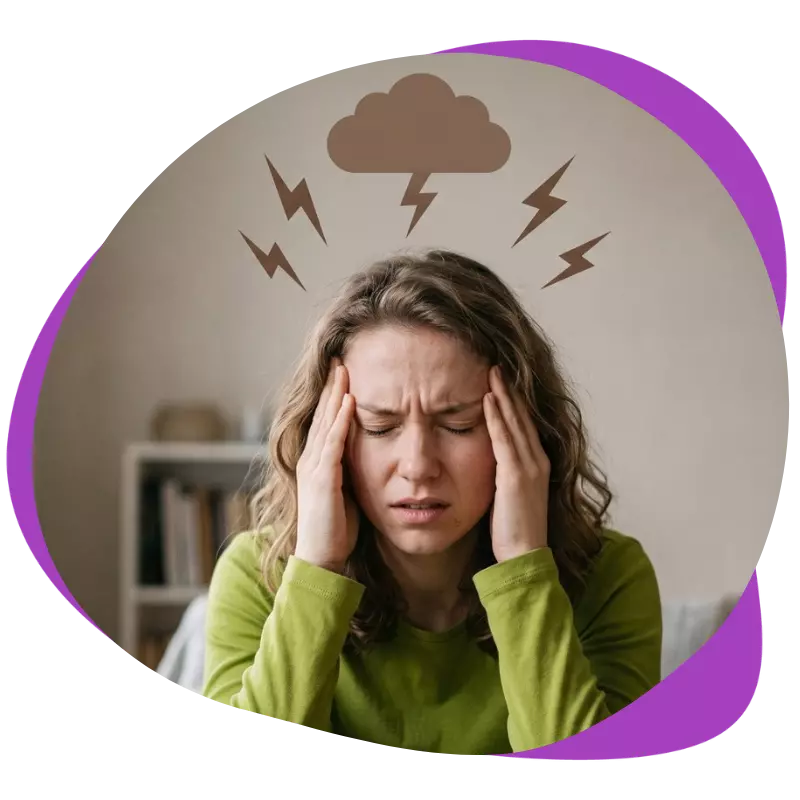
From headaches to heart disease, the health effects of chronic stress have been well documented. But can stress cause early menopause?
Early menopause has some known causes, but whether chronic stress affects when menopause begins is less clear. Research has explored a possible link, but the findings are mixed.
Keep reading to learn what causes early menopause, what research says about stress and menopause timing, and how you can manage stress in midlife and beyond.
Menopause that happens from age 40 to before 45 is called early menopause. When it happens before age 40, it’s called premature menopause. About 10 percent of women experience early menopause, and about 4.6 percent experience premature menopause.
 Another condition, called primary ovarian insufficiency (POI), can cause periods to become irregular or stop before age 40. With POI, ovarian function and periods may resume, whereas with early or premature menopause, menstrual periods permanently end.
In up to half of women who experience early or premature menopause, there’s no obvious cause. When a cause can be identified, it may include:
Other factors that may raise the risk of early menopause include getting your first period before age 11, having a mother or sister who experienced early menopause, and smoking.
Currently, chronic stress isn’t recognized as a cause of early menopause.
Researchers have investigated a possible link between chronic stress and the timing of menopause, but the evidence is mixed.
Some studies suggest a link between higher stress levels and earlier natural menopause, while others have found no association between trauma-related stress and menopause timing. “Natural menopause” refers to menopause that wasn’t caused by surgery or medical treatment.
In one study, researchers examined data from 1,941 Korean women ages 40 to 70 who had experienced natural menopause. The researchers found that women who reported high daily stress reached menopause about five months earlier than those who reported lower stress.
In a much larger study involving more than 46,000 women, researchers found no association between trauma exposure or symptoms of post-traumatic stress disorder (PTSD) and the timing of natural menopause.
When looking at these findings, it’s important to keep a few details in mind. In the first study, for example, the five-month difference was an average across groups. Natural menopause typically occurs around age 51, but the timing varies considerably, so it’s unclear how meaningful that five-month difference is.
Also, the researchers who performed that study acknowledged a potential weakness. They used a single survey question to measure stress, which may not have captured each person’s stress levels over time.
Lastly, association doesn’t imply causation. This means that finding a connection between two factors doesn’t prove one caused the other. Women who report higher stress may reach menopause slightly earlier, but that doesn’t mean stress is directly responsible.
Other factors, such as smoking or underlying health conditions, could help explain the relationship.
Although more research is needed to determine whether chronic stress directly affects menopause timing, understanding how stress may affect your body during perimenopause can help you care for yourself during this stage of life.
Stress may also make some perimenopause symptoms worse, including hot flashes and night sweats. Changes in estrogen levels during perimenopause affect the hypothalamus, a part of the brain that helps regulate body temperature.
These hormonal fluctuations can make the hypothalamus more sensitive to small changes in body temperature, triggering hot flashes and night sweats even when your body doesn’t need to cool down.
These symptoms can interrupt your sleep and leave you feeling tired, irritable, or more sensitive to stress the next day. This can create a cycle in which stress and menopause symptoms reinforce each other.
Stress can affect the body in other ways, too.
When you’re under stress, your brain tells your body to release adrenaline, cortisol, and other stress hormones. This response prepares your body to face a possible threat. It’s useful in the short term, especially if you’re in danger, but once the threat passes, the stress response usually settles down so your body can return to its normal state.
With chronic stress, however, the stress response may be triggered repeatedly or stay active longer than it should. Over time, prolonged stress can affect sleep, mood, heart health, and the immune system. Stress can also contribute to muscle tension, headaches, changes in appetite and weight, and difficulty concentrating.
Together, these effects may worsen existing perimenopause symptoms, especially when hormonal changes are already affecting sleep, mood, and energy levels.

Although the relationship between chronic stress and the timing of menopause is still being explored, finding ways to manage stress can support your health and well-being now and in the future.
Stress is common in midlife, a time when people may be raising children, caring for aging parents, working, and juggling other responsibilities. Perimenopause and other midlife changes can add to stress and anxiety.
One ThisIsMenopause member said, “I’m tired and stressed out.” Another shared, “I have family issues going on, and my anxiety and stress levels are high.”
If you experience ongoing stress or anxiety, ask your healthcare provider or a mental health professional about ways to manage what you’re feeling.
Here are a few practical strategies to consider:
You don’t have to try everything at once. Start with one or two changes that feel manageable, and ask for support when you need it.
Also, keep in mind that irregular periods can be a sign of perimenopause, but they can also have other causes, some of which may require medical attention. Make an appointment with your healthcare provider if you:
Your provider can review your symptoms, menstrual history, medications, family history, and other health conditions to determine the next steps. Be sure to mention if you have a family history of early menopause or have had any medical treatments or procedures that could affect ovarian function, including chemotherapy, radiation, or surgery to remove your ovaries.
Sharing your full health history and any concerns about what you’re experiencing can help your healthcare provider recommend appropriate care and support.
Stress and perimenopause may overlap, but you don’t have to navigate this stage of life alone.
 Continue with Facebook
 Continue with Email
Continue with Facebook
Continue with Email
Become a member to get even more










Join the conversation
This is a member-feature!
Sign up for free to view article comments.
We'd love to hear from you! Please share your name and email to post and read comments.
You'll also get the latest articles directly to your inbox.