
Making sense of menopause, together.
- Connect with women who get it
- Get expert-reviewed resources
- Learn from real women's experiences
Powered By

Menopause and perimenopause can show up in ways that feel confusing, or even scary. One week you’re fine; the next you’re waking up drenched in sweat, forgetting simple words, or dealing with unpredictable periods. It’s natural to wonder what’s going on and to want clear, trustworthy answers.
Ideally, you’d feel comfortable taking those questions to a healthcare provider. But a ThisIsMenopause survey of more than 2,000 women in perimenopause or postmenopause suggests that, for many, doctors aren’t the first or only source of menopause information.
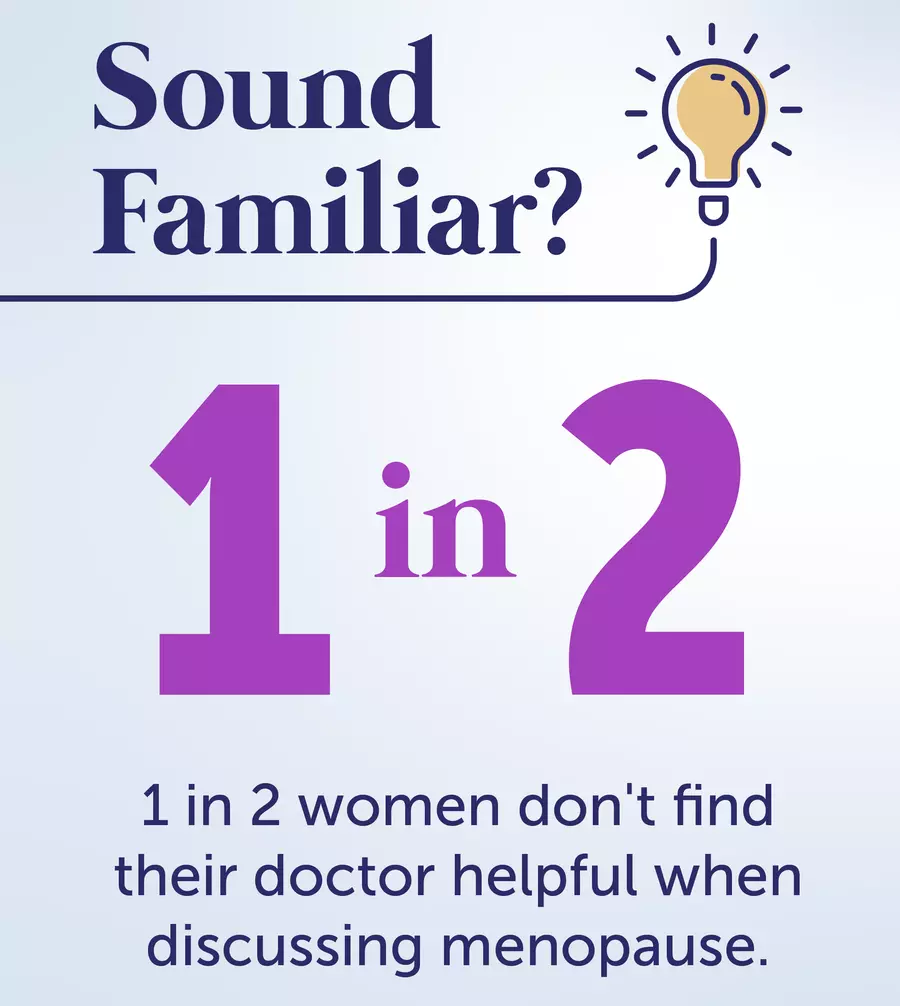
Our survey also found that only about half of women in perimenopause said conversations with their healthcare providers about menopause were especially helpful.
Below are the reasons many women feel uneasy bringing menopause concerns to a doctor or find those conversations unhelpful. We’ve also added some tips on how to make doctor appointments more productive.
A lot of people will push through symptoms quietly rather than talk to a doctor if they think they won’t be taken seriously. For some, it’s not just discouraging; it’s hurtful.
One respondent said, “I consulted my doctor, but he shrugged it off.”

If this feels familiar, you might find it helpful to bring a short symptom list so the appointment stays focused. Make a note of your top three symptoms, when they started, and what you’ve tried to relieve them. If you feel brushed off during the discussion, it’s OK to ask directly, “Can we talk about whether this could be perimenopause or menopause?” and “What else should we rule out?”
You could also make an appointment with a specialist in menopause or women’s health. The Menopause Society offers a tool for locating healthcare providers trained in menopause.
Menopause can come with a long list of symptoms. It can be hard to know what’s “important enough” to mention, especially when visits are short.
When time is tight, people may leave without mentioning the issues that feel most personal: mood shifts, sleep struggles, libido changes, brain fog, or feeling unlike themselves. Some may also avoid bringing up symptoms they fear won’t be taken seriously.
 What Might Help
If you’re dealing with rushed visits, consider writing down your questions ahead of time and bringing them in on paper or on your phone. Even two or three clear questions can help you walk out with a plan. If you can, booking a longer visit (or a follow-up visit) may give you more breathing room.
Many people assume their clinician will bring up menopause when symptoms start, but some respondents said they were left piecing it together on their own.
One said, “I still can’t get my doctors to talk about it.”
Others described a lack of education and guidance: “I wish my doctors would have explained in detail what to expect and how to address issues.”
When you’re not getting clear information, it’s understandable to rely more on friends, family, or online searches. The problem is that “general advice” doesn’t always fit your specific health history, symptoms, or risks.
If you’re not getting enough information, you might find it helpful to ask for basics in plain language, such as:
For some, the biggest barrier isn’t a lack of treatment; it’s a lack of real listening. Menopause can affect how you feel physically, emotionally, and mentally. When your symptoms are quickly dismissed, you may stop bringing them up at all.
 “Doctors need to listen to their patients more carefully and recognize menopause is a serious illness with many symptoms that can have major long-term effects,” one respondent said.
Even when a clinician is knowledgeable, the emotional part matters. Being believed can be the difference between continuing to seek help and deciding it’s not worth the effort.
If you don’t feel heard, it may help to be specific about how your symptoms affect your daily life. Use clear “impact” language, such as:
If your concerns keep getting waved away, a second opinion can be a reasonable next step.
Menopause support can fall into a gray area across primary care, gynecology, endocrinology, and mental health care. Some clinicians also have special training in menopause care. If you don’t know which doctor can help you, it’s easy to delay the conversation.
Not knowing where to start can lead to bouncing between providers, repeating your story, spending money and time on multiple appointments, or giving up and relying on nonmedical sources instead.
If you’re unsure who to see, you might consider starting with the doctor who best knows your overall health history, then asking, “If this is menopause-related, who is the best person to manage it?”
Some people find it helpful to ask specifically about a clinician’s experience with perimenopause and menopause care.
Sometimes the barrier isn’t emotional; it’s practical. If you can’t afford visits, don’t have insurance, or have limited access to consistent care, menopause may become something you “just deal with.”
One respondent said they simply lack the resources to see a doctor when they need to. “I have to suffer through this because I have no money or insurance,” they said.
 When access is limited, people often lean more heavily on personal networks for advice and reassurance — friends, family, and others who’ve been through it.
If you have a clinic, community health center, or telehealth option available, it may be worth asking about lower-cost visits or payment plans. Even one focused appointment can help you understand what’s going on and what your next steps could be.
 Continue with Facebook
 Continue with Email
Continue with Facebook
Continue with Email
Continue with Email
Continue with Facebook
Continue with Email
Become a member to get even more












Join the conversation
This is a member-feature!
Sign up for free to view article comments.
We'd love to hear from you! Please share your name and email to post and read comments.
You'll also get the latest articles directly to your inbox.