
Making sense of menopause, together.
- Connect with women who get it
- Get expert-reviewed resources
- Learn from real women's experiences
Powered By



 Medically reviewed by
Danielle Grimm, MPH, MSN, CNP, WHNP-BC, MSCP
·
Written by
Anastasia Climan, RDN, CDN
Ashwagandha is an herb used in traditional Ayurvedic (Indian) medicine. Today, you’ll see ashwagandha supplements marketed to boost male fertility, support stress management, and help with athletic performance.
But what can ashwagandha do for menopause?
Here’s what you should know about the potential benefits and risks of taking ashwagandha for menopause.
Some studies on ashwagandha have shown promising effects. Some studies found improvements in menopausal symptoms with ashwagandha. However, larger studies are needed.
Research shows that ashwagandha supplements may affect hormone levels. These effects could have real impacts on the physical and mental symptoms of menopause.
One study looked at ashwagandha’s effects on perimenopausal women with hot flashes. It compared groups who took a placebo (an inactive treatment) with those who took 300 milligrams of ashwagandha twice daily.
After eight weeks, the group taking ashwagandha had higher estradiol (a form of estrogen) and lower follicle-stimulating hormone and luteinizing hormone levels than the placebo group. More research is needed to determine if these hormone level changes were specifically linked to taking ashwagandha.
Another study found that daily ashwagandha supplements taken for 24 weeks reduced blood markers linked to bone loss but didn’t significantly change bone mineral density at the hip in postmenopausal women. However, the study was small, and the results may not apply to all women.
The researchers explained how lower estrogen levels in menopause can increase oxidative stress (cell damage) and inflammation. These effects tend to promote bone loss.
Ashwagandha may help limit bone breakdown due to hormonal changes. The study found better bone density scores in the lumbar spine (lower back) in women taking the higher dose of ashwagandha compared to those taking a placebo.
Overall, research on ashwagandha’s positive impact on bone health is preliminary and mixed, meaning more research is needed to determine its exact role in reducing bone loss in menopausal women.
Ashwagandha is promoted as an adaptogen. Adaptogens are substances thought to help the body cope with stress.
Some evidence suggests ashwagandha supplements may help with stress. A review of seven studies found that people consistently reported lower levels of stress and anxiety after taking the supplement. In addition, their levels of the stress hormone cortisol went down with supplementation.
Other studies have had similar findings. Ashwagandha’s been linked to a greater sense of calmness, improved energy levels, and less fatigue.
These results weren’t specific to menopause. But they do show potential benefits for adults.
Research suggests ashwagandha may support better sleep in menopausal women. A study in 66 postmenopausal women found significantly greater improvement in sleep quality with 600 milligrams per day of ashwagandha for 12 weeks compared to a placebo.
Menopause may disrupt your sleep for reasons beyond general insomnia. For example, hot flashes and night sweats may be keeping you up. It’s unclear whether ashwagandha’s effect on hormones explains any improvement in menopause-related sleep problems.
Sign up to view the results!
 Continue with Facebook
 Continue with Email
So far, there is not enough evidence to determine whether ashwagandha is helpful for menopausal symptoms. The strongest evidence for supplementation is for insomnia and stress. Evidence for male fertility is limited.
Ashwagandha supplements may be safe when taken for three months or less. Long-term safety data is limited.
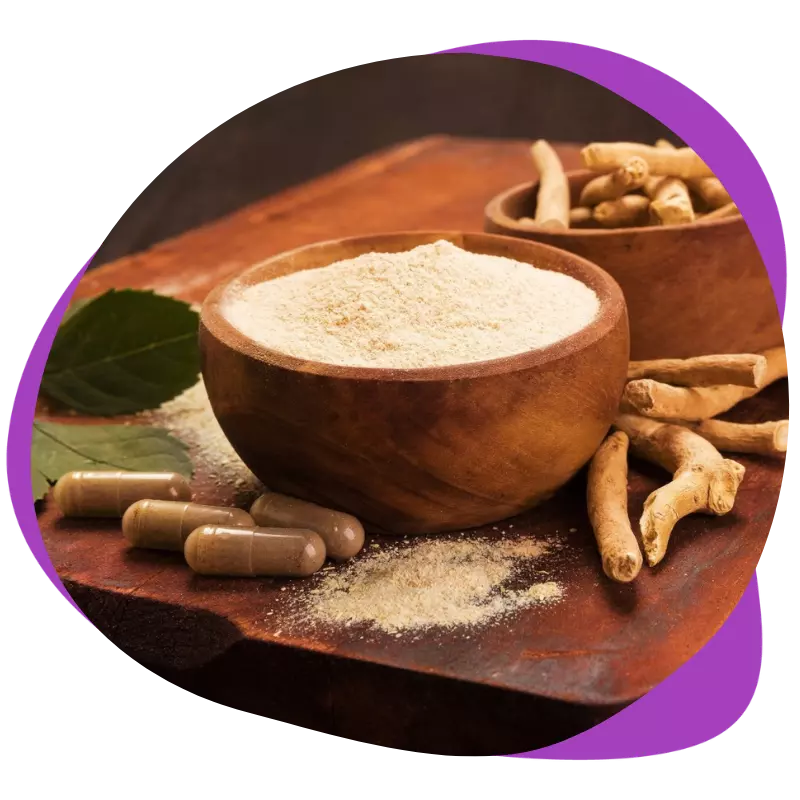 Side effects, including stomach upset, drowsiness, diarrhea, and, in rare cases, liver damage, have been reported. It’s not recommended to take ashwagandha if you have an autoimmune disease or thyroid disorder.
Ashwagandha may also interact with several medications, including medications for diabetes, high blood pressure, and seizure disorders.
Avoid ashwagandha if you’re pregnant or breastfeeding.
Supplements overall aren’t regulated in the same way as prescription medication. There’s always a possible risk of contamination or mislabeling. Even products marketed as natural could have unpredictable or harmful effects.
Always talk to your doctor before taking a dietary supplement like ashwagandha. Chances are, they can offer safer, more proven strategies to help with your symptoms and protect your health.
Continue with Facebook
Continue with Email
Continue with Facebook
Continue with Email
Become a member to get even more











Join the conversation
This is a member-feature!
Sign up for free to view article comments.
We'd love to hear from you! Please share your name and email to post and read comments.
You'll also get the latest articles directly to your inbox.