
Making sense of menopause, together.
- Connect with women who get it
- Get expert-reviewed resources
- Learn from real women's experiences
Powered By

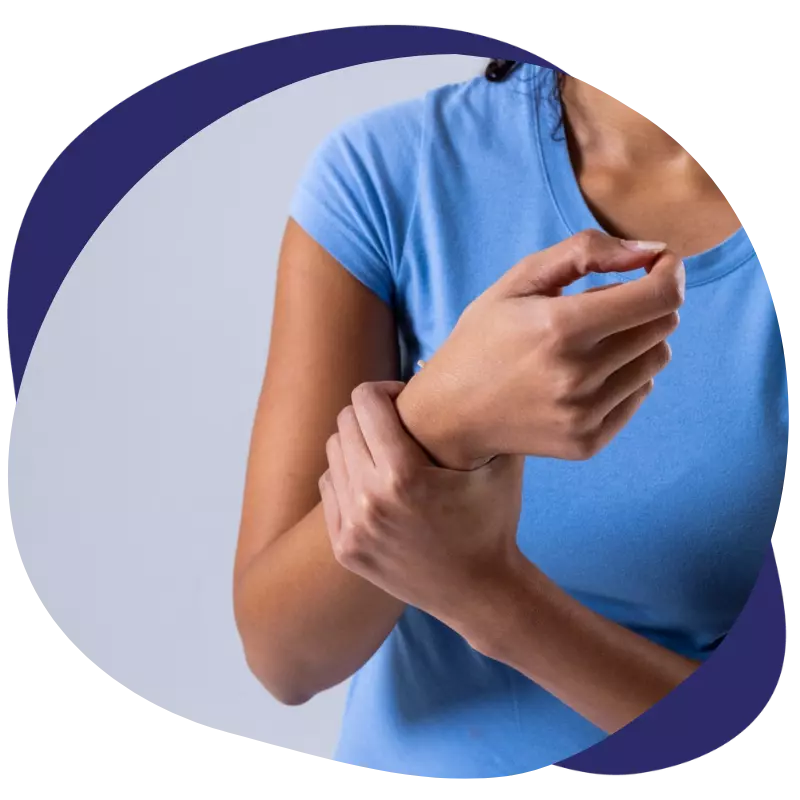 Your knees ache when you go up the stairs. Your hands feel stiff before your coffee even kicks in. You might wonder whether menopause is behind these symptoms or whether something else, like rheumatoid arthritis (RA), could be causing them.
RA is a type of inflammatory arthritis, a condition in which the immune system mistakenly attacks the joints, causing swelling, stiffness, and pain. Menopause marks the end of menstrual periods and is reached after 12 consecutive months without a period, when there is no other medical cause.
It’s not always easy to identify the cause of joint pain. Here’s what research says about menopause and RA symptoms, RA risk, hormone replacement therapy (HRT), and steps you can take to feel better.
Sign up to view the results!
 Continue with Facebook
 Continue with Email
There are two factors to consider — the hormonal shifts and the fact that menopause and RA can cause some of the same symptoms.
During perimenopause, estrogen and progesterone levels fluctuate, with an overall decline as menopause approaches. After menopause, the ovaries produce much lower levels of these hormones.
Estrogen has a complex role in the immune system, and at certain levels, it can help calm inflammation. Research suggests that lower estrogen levels during menopause may contribute to increased inflammation and RA disease activity in some people.
Some studies have found that lower hormone levels may increase inflammatory proteins linked to RA. Other research has found that women who are past menopause tend to have more trouble with daily function because of RA than women who haven’t reached menopause.
Researchers are still working to understand the connection between menopause and RA.
Menopause and RA share several symptoms, which can make it difficult to know what’s causing them. Both can involve fatigue, joint pain, stiffness, and sleep problems. For example, night sweats can disrupt sleep during menopause, while pain and discomfort from RA can make it harder to sleep.
Mood changes may also occur during menopause or with RA. Hormonal shifts, pain, fatigue, and disrupted sleep can all affect how you feel from day to day.
Because these symptoms overlap, it can be hard to tell whether a rough week is related to menopause, an RA flare-up, or both. You might notice your usual RA symptoms feel more intense or that you ache in joints that didn’t bother you before. It may help to track symptom patterns and changes over time rather than focus on a single day.
 Can You Develop RA After Menopause?
Yes. Research links postmenopausal status with higher odds of developing RA. Researchers think declining estrogen levels may play a role, although the exact reasons are still being studied.
Here’s what the numbers show and what to know about new joint pain that shows up around menopause.
A recent review that pooled data from thousands of women found that postmenopausal women had about 35 percent higher odds of developing RA than premenopausal women. The difference was even greater with early menopause. Women who went through menopause before age 45 had roughly three times the odds of developing RA compared with those who reached menopause later.
Early menopause may also affect women who already have RA. A five-year study found that participants with early menopause had higher disease activity, plus worse fatigue, sleep problems, and quality of life, than those who reached menopause later.
Researchers aren’t certain why early menopause is linked to greater risk, but one theory is that having lower estrogen levels for more years may affect how the immune system regulates inflammation. Still, early menopause is only one possible risk factor and doesn’t mean you’ll develop or have more severe RA.
Menopause and autoimmune conditions such as RA, lupus, and Sjögren’s disease share several symptoms, including fatigue, joint pain, stiffness, and dryness, which makes it hard to tell one condition from another. Joint symptoms can also be caused by osteoarthritis, a wear-and-tear condition that becomes more common with age.
Blood work and other tests can help your healthcare provider determine whether an autoimmune condition or another health issue may be causing your symptoms. If your joint pain is new, persists, or comes with swelling, talk with your healthcare provider rather than assuming it’s caused by menopause.
For many women with RA, hormone therapy may be an option, but it isn’t right for everyone. Here’s what current guidance says about using HRT with RA treatment, as well as nonhormonal alternatives.
According to the American College of Rheumatology, HRT can be considered for postmenopausal people with RA who have menopause symptoms and no health reason to avoid it. Studies haven’t linked HRT to more RA flares, and some research suggests it may ease disease activity.
Hormone therapy is generally not recommended for people with certain health conditions, such as a history of blood clots, stroke, heart attack, certain hormone-sensitive cancers, or liver disease. Hormone therapy requires special consideration for people with lupus, particularly those with antiphospholipid antibodies, which raise the risk of blood clots.
If hormone therapy is right for you, how you take it may also matter. Estrogen taken through the skin, such as with a patch, may carry a lower risk of blood clots than estrogen taken by mouth.
Whether to use hormone therapy is a decision to make with your rheumatologist and your menopause care provider. Together, you can consider your symptoms, health history, and the potential benefits and risks.
If HRT isn’t an option for you or you prefer not to use it, other treatments are available. Both cognitive behavioral therapy and clinical hypnosis have evidence showing they can help with hot flashes and night sweats, also called vasomotor symptoms.
Fezolinetant is a nonhormonal medication approved to treat moderate to severe hot flashes caused by menopause. It targets a brain pathway involved in temperature regulation, and studies show that it can reduce hot flash frequency. Talk with your provider about which nonhormonal approach may be best for your symptoms and health history.
Alongside any medication, everyday habits may help with menopause symptoms, RA symptoms, and overall well-being. These healthy habits include:
✓ Regular exercise — Aerobic activity and resistance training can help ease joint pain, slow bone loss, and improve mood.
✓ A Mediterranean-style eating pattern — A diet rich in vegetables, fruit, fish, and olive oil may reduce inflammation and support overall health.
✓ Smoking cessation — Smoking is a known risk factor for RA and may also worsen hot flashes and night sweats.
✓ Mindfulness meditation — Several studies show that mindfulness practices may help with sleep and mood, which can be affected by both menopause and RA.
✓ Adequate calcium and vitamin D intake — Both nutrients support bone health, which is especially important because bone loss speeds up after menopause.
Menopause may influence RA in several ways. Shifting hormone levels may affect inflammation and RA disease activity, while menopause and RA share some of the same symptoms. Treatment options may include hormone therapy, nonhormonal treatments, and everyday habits that support joint and overall health.
A good place to start today is by keeping a simple log of your symptoms. Note when symptoms like joint pain, hot flashes, or fatigue occur so you and your healthcare providers can spot patterns.
Talk with your rheumatologist and your menopause care provider about what you’re experiencing. Working together can help them create a treatment plan that considers both RA and menopause.
Continue with Facebook
Continue with Email
Continue with Facebook
Continue with Email
Become a member to get even more









Join the conversation
This is a member-feature!
Sign up for free to view article comments.
We'd love to hear from you! Please share your name and email to post and read comments.
You'll also get the latest articles directly to your inbox.