
Making sense of menopause, together.
- Connect with women who get it
- Get expert-reviewed resources
- Learn from real women's experiences
Powered By

 1 Reaction
·
Save
1 Reaction
·
Save
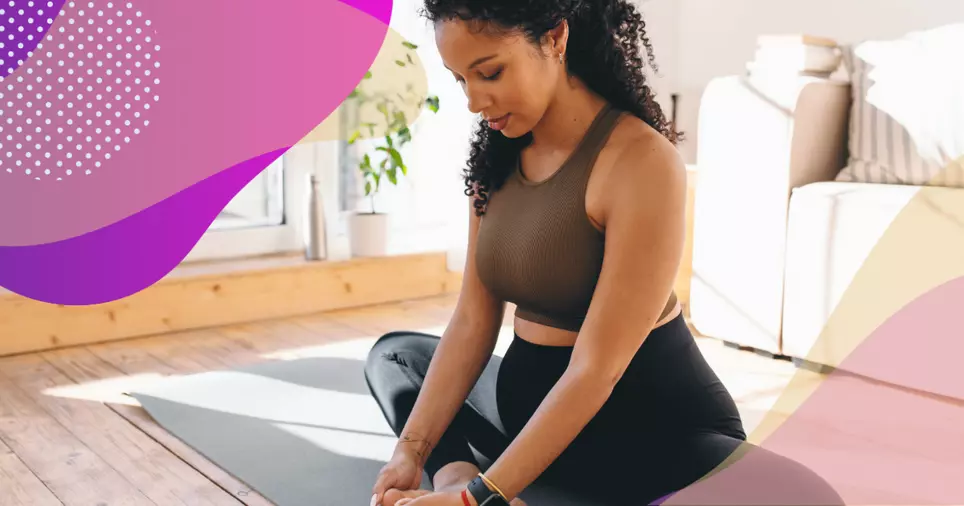
During menopause, bone loss can happen at a rapid rate. Osteoporosis (a condition that weakens bones) can lead to broken bones, causing chronic pain and mobility problems. You can help protect your bone health by staying physically active. The good news is, you don’t even have to leave the house if you don’t feel like it.
To get more insight, ThisIsMenopause spoke with Cindi Rauert Lanners. Lanners is a physical therapist and a board-certified clinical specialist in women’s health and pelvic health. She said that when it comes to strong bones, strength training is the best form of exercise. “Strength training increases the forces on the bone and invites the bone, or forces it, to adapt,” Lanners explained.
Strength training can feel intimidating if you’re a beginner. “If you haven’t been exercising at all, you can even start with your own body weight to see how you feel with that. Then gauge how sore you are the next day,” Lanners encouraged.
Here are some of the best moves you can do at home to build stronger muscles and better bone health.
Squats are a fundamental exercise for your lower body. They support stronger hips, thighs, and lower back. They’re also good for flexibility and stability, as long as you do them the right way.
To get started, you can do squats using just your body weight. Here’s how:
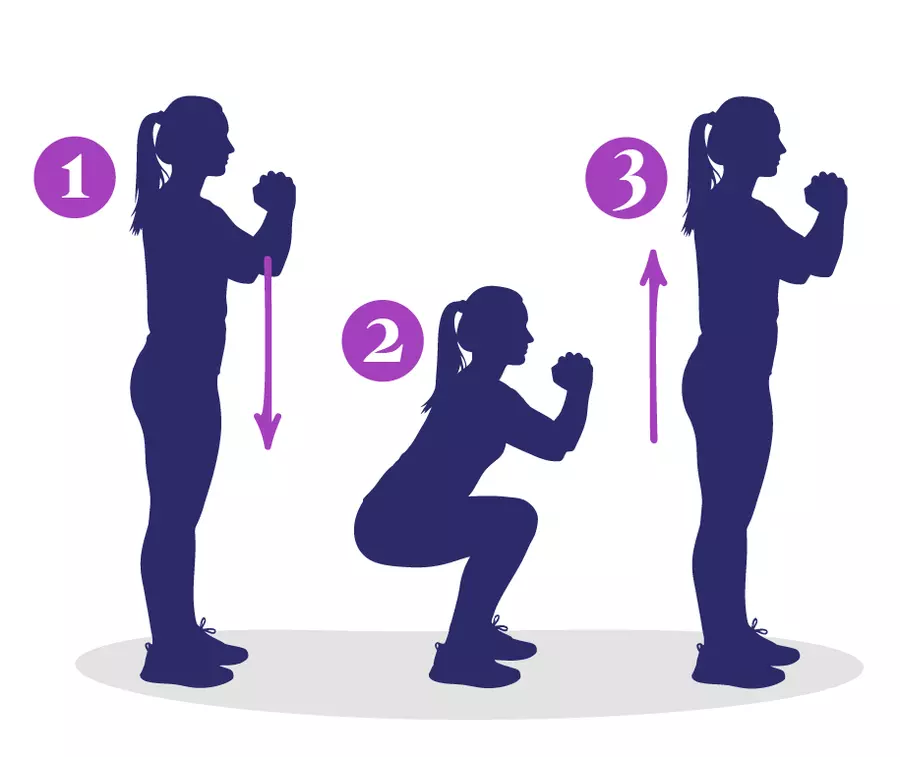
Keep your movements slow and controlled. If you find squatting too difficult, that’s OK. You can hold a railing or counter nearby for added support.
“Squats don’t agree with everyone,” Lanners noted. “As a physical therapist, I know a lot of our patients are challenged with squats due to knee pain or other quirks. So you can modify it. You can do sit-to-stand. So you sit on the chair, and you stand up.”
Once you feel more confident, you can add hand weights to increase the challenge.
If you’re nervous about the idea of doing push-ups, don’t be. There are many variations you can do. For instance, you can start with wall push-ups. Lanners also discussed countertop push-ups as a good option for beginners.
As you get stronger, you can continue moving closer to a traditional push-up position. An example progression may be:
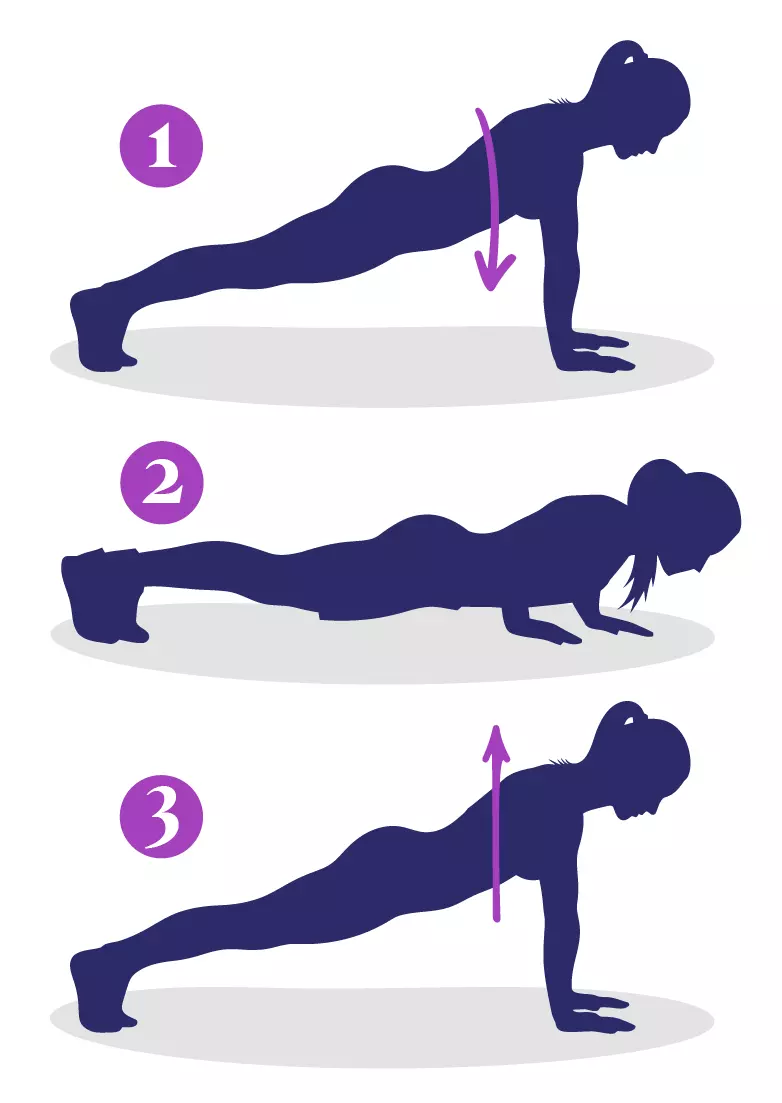
Eventually, you can try push-ups on the ground with your knees bent underneath you for support. You can also practice holding a plank position on your hands or elbows to strengthen your core and shoulders.
Follow the steps below to make sure you have correct form for a standard push-up:
Deadlifts are a popular gym exercise to boost the muscles that support your spine and pelvis. But you can also do them at home. Romanian deadlifts are a good place to start because they require less range of motion than traditional deadlifts and allow you to slowly build strength. As you progress, you may be able to try a conventional deadlift position from the floor.
To practice doing this move without weights, follow these steps:
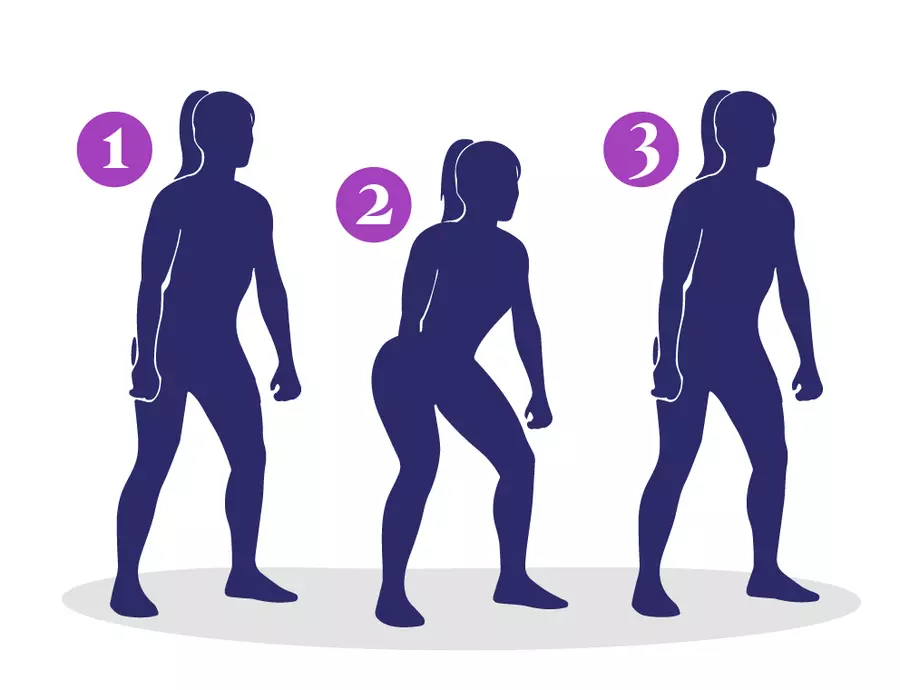
To maintain proper form, don’t round your back, bend or lock your knees, or look up during the exercise.
“It’s a great functional task that I think many people are intimidated by,” Lanners said. “But we’re all doing those movements when we pick anything up from the floor. So you can even just hold onto dumbbells or any heavy object that you have at your house.”
“Even a jug of water or milk is eight pounds,” she explained. “So you could fill up two containers, and then you have two eight-pound weights, and you could practice deadlifting.”
Want to feel like a superhero? This back exercise can help. And the best part is, it’s pretty simple.
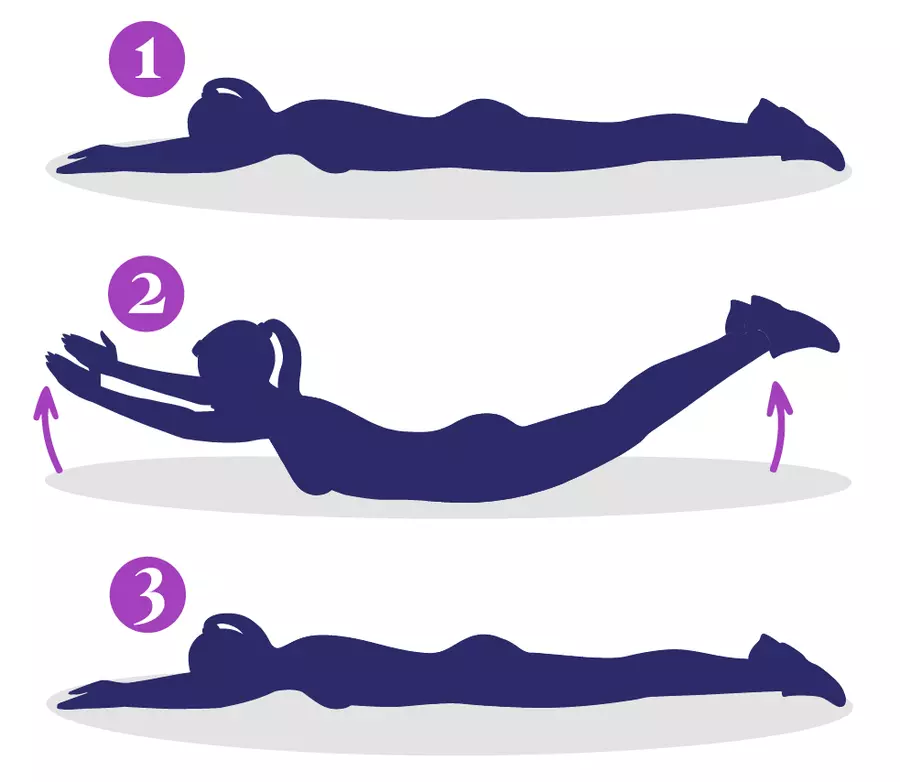
“The key with strength training is progressive overload, meaning you always need to be challenging yourself from week to week,” Lanners shared. “Add a little bit more weight or add a few more repetitions (reps). So say you’re like, ‘Oh, I’m going to try to go up by 2.5 to 5 pounds next week.’ Or you’re thinking, ‘Oh, I’ve been doing three sets of 10. Next week I’m going to try three sets of 12 and see how I do.’”
You can also consider adding weights, resistance bands, and new variations to keep challenging yourself as you get stronger.
When asked how often people should strength train, Lanners said, “Minimum, two times a week. Three times a week, total body is fantastic.”
“If you did just three exercises and three sets of anywhere between eight and 12, two to three times a week, you’re going to start to gain strength. Then, as you get more confident, you can add on some additional movements,” Lanners said. “So total body is a great way to start out. As you progress, some people like to do what we call splits, where you do two days of upper body and two days of lower body.”
Keeping track of your home workouts on a calendar or your phone can help ensure that you’re building on your progress over time.
Remember to eat enough foods with protein, calcium, and vitamin D to support your active lifestyle. Not sure how to get started? Ask your healthcare provider for referrals to a physical therapist and a registered dietitian to get you on the right track.
 Continue with Facebook
 Continue with Email
Continue with Facebook
Continue with Email
Continue with Email
Continue with Facebook
Continue with Email
Become a member to get even more











Join the conversation
This is a member-feature!
Sign up for free to view article comments.
We'd love to hear from you! Please share your name and email to post and read comments.
You'll also get the latest articles directly to your inbox.