
Making sense of menopause, together.
- Connect with women who get it
- Get expert-reviewed resources
- Learn from real women's experiences
Powered By


 2 Reactions
·
Save
2 Reactions
·
Save
Perimenopause can bring many unexpected challenges, including hot flashes, brain fog, vaginal dryness, and sleep problems. For many women, challenges also include finding a healthcare provider who listens to them and takes their symptoms seriously.
If you’ve ever felt dismissed, rushed, or unsure where to turn, you’re not alone. The good news is that knowledgeable, compassionate menopause care does exist. Here are some steps you can take to find a doctor who understands.
Each year, about 2.5 million women in the United States enter perimenopause and 1.3 million reach menopause — yet many physicians receive little formal training in menopause care. As a result, there’s a shortage of clinicians who specialize in this stage of life.
“I wish there were doctors who were educated in women’s issues to help inform us before menopause begins,” one woman told ThisIsMenopause. “I also wish they would find ways to help us.”
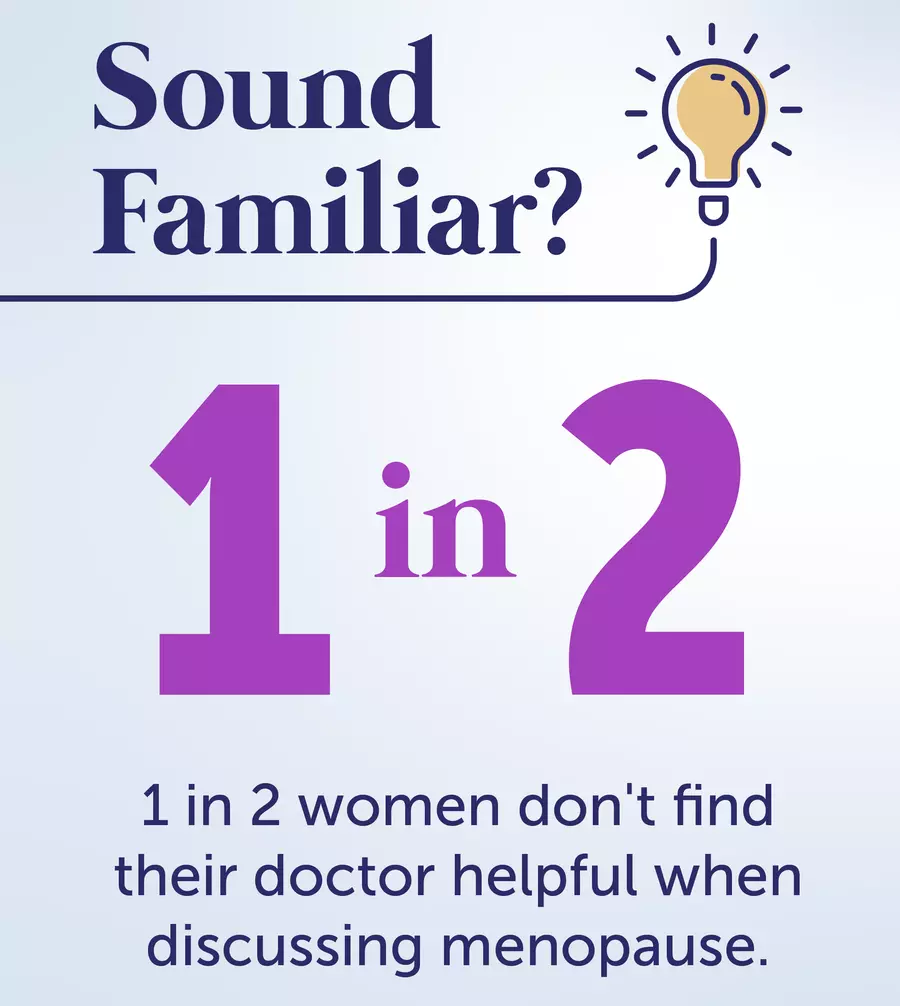 While some doctors are educated about women’s health in midlife, many aren’t. It can take time and effort to find a provider who is both knowledgeable about menopause and willing to listen.
Here’s what other women have shared:
Some women continue seeing their primary care provider or OB-GYN even when they feel unheard. Other common challenges include long wait times for appointments, difficulty navigating insurance coverage, symptoms that overlap with other health conditions, and short or rushed visits.
Cultural stigma can also play a role. In some settings, menopause symptoms are seen as just a normal part of aging, which may prevent women from getting the care or treatment they need.
As you move through this stage of life, you deserve a doctor who understands perimenopause care. Here are six tips to help you find one.
Depending on your insurance plan or healthcare system, you may need a referral from your primary care provider (PCP) to see a menopause specialist. Even if a referral isn’t required, your PCP can be a helpful starting point. They may know which menopause practitioners in your area have experience with menopause care.
Before the visit, consider tracking your menopause symptoms for a few weeks. Noting details about your hot flashes, night sweats, mood swings, irregular periods, sleep problems, and other concerns can help you describe what you’re experiencing. This information also helps your provider rule out other medical conditions and guide you to the right type of care.

If your primary care provider has training in menopause management, you may decide to continue working with them. If not, you can ask about seeing someone with more experience in menopause care. Advocating for yourself and seeking compassionate, evidence-based care can help protect your health and your quality of life.
The Menopause Society is a nonprofit focused on helping women stay healthy, informed, and supported during midlife and beyond. The organization advances research and education. It also certifies healthcare professionals who have completed advanced training in menopause care. After passing a competency exam — a test that confirms their knowledge — clinicians earn the Menopause Society Certified Practitioner (MSCP) credential.
To find a certified menopause practitioner, you can search the Menopause Society’s online directory by location and profession. There’s also a telehealth search option if you prefer virtual care or can’t find a specialist near you.
Although MSCP certification doesn’t guarantee a provider will be the perfect match, it’s a helpful starting point. Once you find someone with menopause care expertise, you can ask questions and share your symptoms before deciding if they’re the right fit for you.
Is Your Doctor Dismissing You? Medical Red Flags To Watch For
Dr. Angela McCool-Pearson and Dr. Christy James Guepet share signs it may be time to find a new menopause provider and how to seek qualified, informed care.
00:00:00:03 - 00:00:20:10
Sara Michael
They're saying, “Oh, this is just getting older.” “This is part of aging.” “Your hormone levels are normal.” “You're fine.” What are some of these, like flags, red flags that you would kind of tell a woman to keep an eye out for, to know that this is not the provider for them. They need to look for someone else who's going to really take their symptoms seriously.
00:00:20:11 - 00:00:24:12
Dr. Angela McCool-Pearson
Everything you just said.
00:00:24:14 - 00:00:41:20
Dr. Angela McCool-Pearson
And I also want women to understand that sometimes they say that because they don't know what to say. You know, it's not something that they spend their time learning. And we spend a lot of time reading about HRT and the nuances of HRT. All those things that you just said, just that means, okay, I might need to ask somebody else.
00:00:41:20 - 00:01:09:10
Dr. Angela McCool-Pearson
So don't just take that and walk away and go, well, I guess I'm just going to have to deal with this.
Dr. Christy James Guepet
And there is a significant difference in training between MDs and DOs and provider extenders, like nurse practitioners and PAs. There are excellent extenders in this realm, but look at their their credentials too and look at the doctor who's overseeing that
00:01:09:10 - 00:01:34:18
Dr. Christy James Guepet
care to make sure that it's safely done. If you do a web search, you can look and find interest of physicians and their bios. So you want to look for training and credentialing. And all of that should be readily available now with searches.
Dr. Angela McCool-Pearson
So, a word of caution. Be aware of hormone clinics that kind of pop up overnight, because a lot of these places don't have a lot of oversight.
00:01:34:19 - 00:01:57:07
Dr. Angela McCool-Pearson
Sometimes they don't have the clinical experience, and so, we want patients to be cautious and wary of that. The other thing too, and we've touched on this before about not waiting until your annual visit to talk to your primary care, or your ob-gyn about this, because this is a whole separate thing, and they just do wellness check. And so, I think we really want patients, women, to understand that this is a separate scenario.
00:01:57:07 - 00:02:14:03
Dr. Angela McCool-Pearson
And so, if you're sidebarring that in on the top of a wellness visit, whether it's with one of us or your primary care provider, first of all, they're not going to be prepared for that, and you're probably not going to get the time that that question needs.
Voiceover
Learn more and connect at ThisIsMenopause.com.
Many women naturally turn to obstetrician-gynecologists (OB-GYNs) for menopause care. OB-GYNs specialize in reproductive health and hormonal changes, but they aren’t the only clinicians who can support you during midlife.
Perimenopause can start eight to 10 years before menopause and cause a wide range of symptoms. These may include sleep disruption, mood changes, vaginal dryness, and weight gain. As estrogen levels drop, cholesterol levels may rise. After menopause (postmenopause), other health risks can increase, such as heart disease and osteoporosis (low bone density).
Because menopause affects more than reproductive health, other types of providers may also be helpful. Many have training to help manage symptoms throughout the body and support long-term health. You may find experienced menopause care from:
The most important factor isn’t the type of doctor you see — it’s finding a provider who understands menopause, stays up to date on current treatments, listens to your concerns, and respects your choices.
If you’re open to virtual visits, telehealth for menopause can expand your options. Using a secure video platform on your phone, tablet, or computer, you can meet with a licensed healthcare provider. They’ll review your medical history, family history, symptoms, and risk factors, as well as go over your menopause treatment options. In many states, telehealth providers can also prescribe menopause treatments, such as hormone replacement therapy (HRT).
Telehealth can be faster and more convenient than in-person visits, and research suggests it can be just as effective for some types of care. Still, it’s not the right choice for everyone. Some people prefer seeing their doctor face-to-face. In addition, certain menopause concerns may require in-person checkups, lab tests, or imaging.
Before scheduling a visit, review the telehealth provider’s policies and check your insurance coverage. Several telehealth platforms offer virtual menopause care, including companies such as Alloy, Carrot, Gennev, Hers, and Midi.
If you’re comfortable talking about menopause with other women, they can be a valuable source of recommendations for menopause providers. You might start by checking with:
When asking for recommendations, consider also asking a few follow-up questions. For example, you might ask why they like their doctor, what symptoms they’ve experienced, what treatments they’ve tried, and how much time their provider spends with them at each visit.
Hearing about firsthand experiences can help you find a menopause specialist who is knowledgeable, compassionate, and responsive to your concerns. These women may also share lifestyle changes that are helping them navigate this phase of life.
Menopause can affect your physical health, mental health, and overall quality of life. This isn’t a time to settle for care that doesn’t meet your needs. If you don’t feel heard, supported, or confident in your treatment plan, it’s OK to seek a second opinion or switch providers.
Some people feel guilty about getting a second opinion. They may worry about hurting their doctor’s feelings or damaging the relationship. But a provider who truly wants the best for you will support your efforts to get the care you need, even if that care comes from someone else.
Ask questions, do your research, and advocate for yourself. If something doesn’t feel right, consider trying another provider. Menopause symptoms aren’t something you simply have to accept in midlife. You deserve compassionate, supportive care that addresses your symptoms and helps you navigate menopause and the years beyond.
 Continue with Facebook
 Continue with Email
Continue with Facebook
Continue with Email
Continue with Email
Continue with Facebook
Continue with Email
Become a member to get even more












Join the conversation
This is a member-feature!
Sign up for free to view article comments.
We'd love to hear from you! Please share your name and email to post and read comments.
You'll also get the latest articles directly to your inbox.