
Making sense of menopause, together.
- Connect with women who get it
- Get expert-reviewed resources
- Learn from real women's experiences
Powered By



 7 Reactions
·
Save
7 Reactions
·
Save
Most women know that menopause is no walk in the park. Still, many people have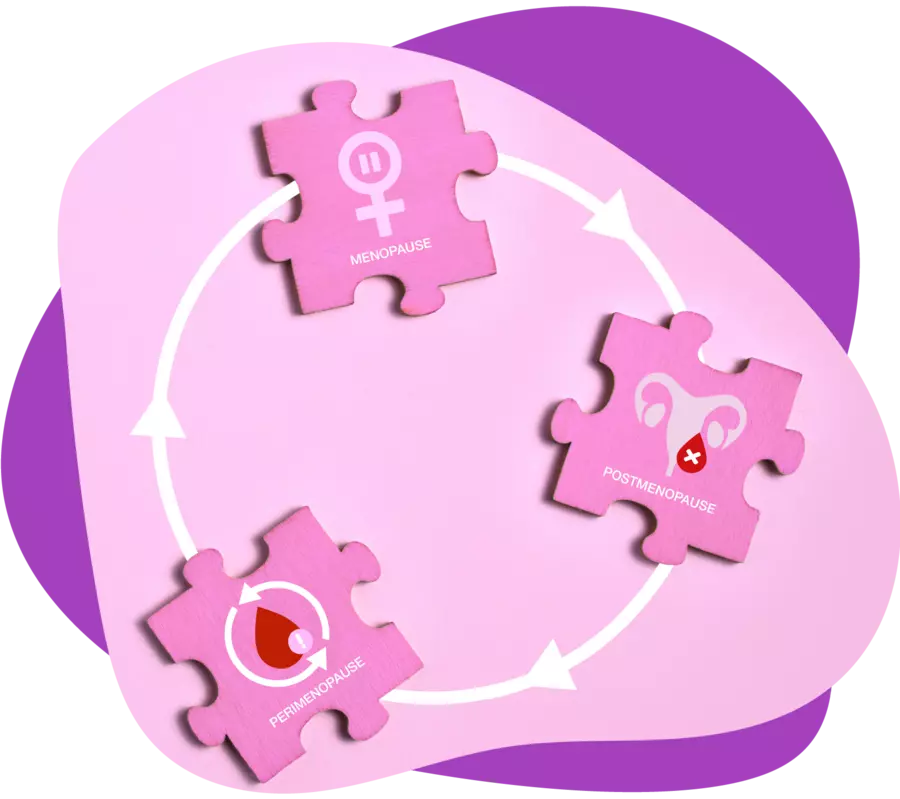 questions about what menopause is and how it affects the body. So what do we mean when we talk about the stages of menopause?
Menopause is confirmed after you have gone 12 months without a menstrual period. But this does not happen all at once. Over time, your ovaries produce less estrogen and progesterone, and eventually, your periods stop.
There are three phases: perimenopause, menopause, and postmenopause.
Perimenopause starts before your periods stop. As you approach menopause, your ovaries make less estrogen over time, and you may begin to notice the effects of these changing hormone levels. If you’re wondering, “Is this perimenopause?” it just might be.
Changes in your menstrual cycle are often one of the first signs of perimenopause. These changes may include:
During perimenopause, many women also have hot flashes, poor sleep, mood changes, anxiety, and vaginal dryness. Perimenopause usually begins in your 40s and can last for months or years.
Everyone is different. Hot flashes are the most common symptom of perimenopause, and most women experience them. Hot flashes that happen during sleep are called night sweats.
About 1 in 3 women has moderate to severe hot flashes, which interfere with daily life. For most women, hot flashes last for a year or two, but they can last much longer.
You can still be in perimenopause even if you don’t have any hot flashes. Some women continue to have hot flashes even after menopause.
The term menopause refers to the milestone of going 12 months without a period. You won’t know you’ve reached menopause until you reach that one-year mark. Because perimenopause often involves stops and starts, doctors use the 12-month marker to confirm that your periods have stopped.
The average age for menopause in the United States is 51. Natural menopause most often takes place between ages 45 and 56. Menopause between ages 40 and 45 is called early menopause, while menopause before age 40 is called premature menopause.
Average age for menopause in the United States
Typical range for natural menopause
Menopause this early is considered premature
At menopause, you have reached the end of your reproductive years. Your ovaries no longer release eggs, a process called ovulation, and they produce much less estrogen. Because it marks the 12-month moment, menopause is more a “moment in time” than a stage.
After you have gone 12 months without a period, you enter postmenopause, which lasts for the rest of your life. The full transition from perimenopause to postmenopause typically takes around seven years but can last up to 14 years.
During postmenopause, your hormones remain at steady, low levels rather than rising and falling as they do during your menstrual cycle and perimenopause. As a result, many women experience some relief from perimenopause symptoms, which become less frequent over time.
However, some women have hot flashes for years, and vaginal dryness may continue or worsen. Lower levels of estrogen in this phase can also increase the risk of osteoporosis and heart disease. The long-term health risks linked to lower estrogen make preventive healthcare especially important for women in this stage of life.
 Managing Your Health During Menopause
Menopause is a natural part of aging, but its symptoms can interfere with sleep, mood, sex, work, and daily life. Treatment options include hormone therapy, nonhormonal medications, vaginal treatments, and lifestyle changes. Your doctor can help you choose an option based on your symptoms, health history, and preferences.
Although these treatments exist, they often aren’t discussed enough. In one recent survey, nearly 70 percent of adult women said there’s a need for better menopause education among the general public and that women’s health is not studied enough.
It is estimated that about 75 percent of women never receive treatment for menopause symptoms, although 60 percent seek help.

Using a symptom tracker, such as a notebook or app where you record your symptoms and when they happen, can help you find patterns and share useful information with your doctor. Advocating for yourself can help you get the care you need.
Your care team should take all of your symptoms seriously and help you find treatment options that work for you. At any age, you deserve to feel good in your body, so don’t be afraid to speak up about the care you need.
 Continue with Facebook
 Continue with Email
Continue with Facebook
Continue with Email
Continue with Email
Continue with Facebook
Continue with Email
Become a member to get even more









Join the conversation
This is a member-feature!
Sign up for free to view article comments.
We'd love to hear from you! Please share your name and email to post and read comments.
You'll also get the latest articles directly to your inbox.