
Making sense of menopause, together.
- Connect with women who get it
- Get expert-reviewed resources
- Learn from real women's experiences
Powered By



 Medically reviewed by
Danielle Grimm, MPH, MSN, CNP, WHNP-BC, MSCP
·
Written by
Anastasia Climan, RDN, CDN
Turmeric is a vibrant yellow-orange spice commonly used in Indian cuisine and some types of mustard. It contains curcumin, a compound with antioxidant and anti-inflammatory properties. Researchers are studying whether curcumin may help with menopause symptoms, including hot flashes and weight changes, as well as heart and bone health.
But how strong is the evidence, and are supplements containing turmeric or curcumin safe? Here’s what research shows about their potential benefits during menopause, along with what to know about possible risks.
Sign up to view the results!
 Continue with Facebook
 Continue with Email
Most research on turmeric and menopause has focused on curcumin, a natural compound found in turmeric, or on concentrated turmeric extracts.
While there is not enough research to know whether these preparations can help with menopause symptoms, some early results are promising. Here’s what researchers have found so far.
There’s mixed evidence on curcumin and menopause symptoms. One study found that vasomotor symptoms, such as hot flashes, improved after six weeks of supplementation. Another study revealed similar benefits after eight weeks of supplementation.
In one small study of 40 postmenopausal women, those who took 1,000 milligrams of daily curcumin had fewer hot flashes than those who took a placebo (supplement with no active ingredients). No major side effects were reported, and quality of life improved within six weeks. However, these results were preliminary and need to be repeated in future studies.
Not all studies on curcumin’s effects on menopause symptoms have found a benefit. More research is needed to understand the potential effects.
Lower estrogen levels caused by menopause may contribute to unhealthy weight gain. Some researchers suspect that long-term curcumin supplementation could help regulate blood sugar and fat levels, including cholesterol.
However, most studies have been on animals and human research is still limited. That means it’s too soon to know whether curcumin supplementation can help manage menopause-related weight or metabolic changes.
Menopause also raises the risk of heart disease. Lower estrogen levels promote stiffer arteries and cardiovascular problems like hypertension (high blood pressure).
Some evidence suggests that curcumin could help protect the cardiovascular system from menopause-related changes. But for now, available studies are too small to support clear recommendations on curcumin and heart health.
Curcumin may help maintain bone strength after menopause by affecting how the body breaks down and builds bone. A research review found that these benefits may occur when curcumin is combined with other herbs, such as Nigella sativa.
It’s possible that mixed herbal supplements that include curcumin could help slow bone loss from low estrogen in menopause. However, evidence for curcumin alone is not sufficient to determine whether it meaningfully protects bone health.
Turmeric is generally considered safe when used in food in typical amounts. However, turmeric and curcumin supplements can cause side effects and may pose some risks.
Potential side effects of oral turmeric supplements include:
Topical curcumin products may cause itching or hives.
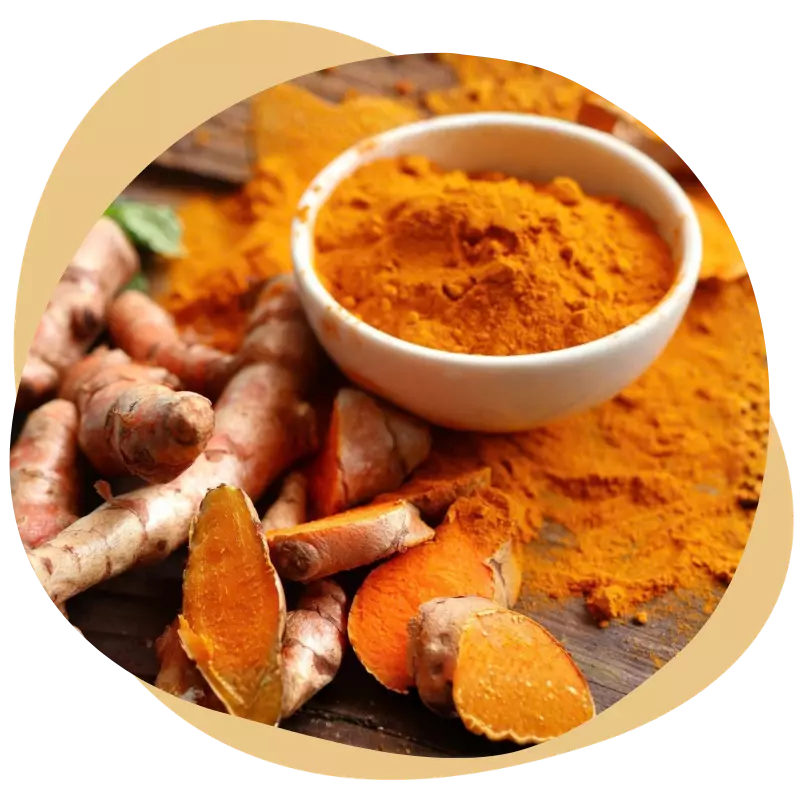 As with other dietary supplements, the U.S. Food and Drug Administration (FDA) doesn’t approve turmeric and curcumin supplements for safety and effectiveness before they’re marketed. Instead, manufacturers must ensure their products are safe. Sometimes, issues come to light after customers have a negative reaction.
Some manufacturers add compounds to turmeric supplements to make curcumin easier to absorb. Piperine from black pepper is a common example.
However, these highly absorbable forms of curcumin could damage the liver. Signs of liver damage may include:
Stop taking turmeric or curcumin products and contact your healthcare provider right away if you notice these warning signs.

You may look to turmeric or curcumin supplements as an alternative to hormone replacement therapy for menopause symptoms. But you should ask your doctor before experimenting with supplements yourself.
Some supplements may interact with your medications or put your health at risk. Turmeric and curcumin products can also differ in how much curcumin they contain and how well your body absorbs it.
Your provider can answer your questions and address your symptoms using evidence-based methods that are safe for you.
Continue with Facebook
Continue with Email
Continue with Facebook
Continue with Email
Become a member to get even more









Join the conversation
This is a member-feature!
Sign up for free to view article comments.
We'd love to hear from you! Please share your name and email to post and read comments.
You'll also get the latest articles directly to your inbox.