
Making sense of menopause, together.
- Connect with women who get it
- Get expert-reviewed resources
- Learn from real women's experiences
Powered By



 5 Reactions
·
Save
5 Reactions
·
Save
00:00:00:23 - 00:00:34:16
Voiceover
Hot flashes. Mood swings. Brain fog. Menopause can feel confusing. Millions of women go through it. But understanding what's happening in your body can make this transition easier. Menopause is a natural stage of life that happens in three phases: perimenopause, menopause, and postmenopause. Perimenopause usually starts in your 40s. During this time, estrogen and progesterone levels begin to change, causing symptoms like irregular periods, hot flashes, sleep problems, and mood changes.
00:00:34:18 - 00:01:09:01
Voiceover
Menopause is officially reached after 12 months without a period. In the US, the average age is 51. After menopause comes postmenopause. Symptoms may improve, but lower estrogen can affect bone and heart health over time. Many women also experience brain fog, vaginal dryness, or bladder changes during menopause. These symptoms are common and treatable. Treatment options include hormone therapy, nonhormonal medications, exercise, healthy sleep habits, and stress management.
00:01:09:02 - 00:01:15:12
Voiceover
Most importantly, you don't have to go through menopause alone. Learn more and connect at ThisIsMenopause.com.
Menopause affects millions of women, but it can still feel confusing or alarming when hot flashes, irregular periods, and sleepless nights seem to come out of nowhere.
Understanding what’s happening in your body can make this transition a lot easier to manage. Read on to learn the basics of perimenopause and menopause.
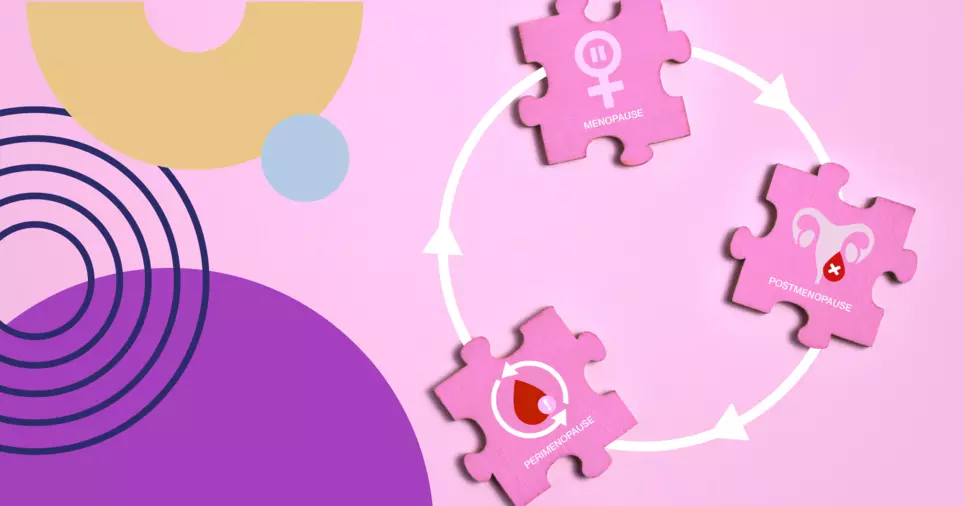
Menopause is often used as an umbrella term to describe three distinct stages: perimenopause, menopause, and postmenopause.
Perimenopause is the transition phase leading up to the end of menstruation. It usually begins in your 40s, but some women start this transition earlier or later.
During this time, hormone levels begin to fluctuate, or go up and down. You may have irregular periods, mood swings, and hot flashes. Perimenopause can last anywhere from a few years to a decade.
Menopause is defined as going 12 consecutive months without a menstrual period. In the United States, the average age of menopause is 51. Most women will enter menopause between the ages of 45 and 55.
Menopause that occurs naturally before age 45 is considered early menopause. If you go into menopause naturally before age 40, it’s called premature menopause.
Sometimes women enter menopause due to medical treatments like chemotherapy or surgeries to remove their ovaries.
Postmenopause refers to the years after menopause. Many symptoms from perimenopause may ease during this time, but some health risks, particularly for bones and the heart, become more important to manage.
The driving force behind menopause is a change in the production of estrogen and progesterone, the two main hormones that regulate the menstrual cycle. Over time, the ovaries produce less of these hormones.
During perimenopause, estrogen levels may go up and down. These changes can cause many bothersome symptoms. Progesterone levels drop without major fluctuations.
Estrogen doesn’t just affect the reproductive system. It affects many parts of the body, including the brain, bones, skin, heart, and urinary tract. That’s why menopause symptoms can feel so wide-ranging.
Menopause symptoms vary widely. Some women have few menopause symptoms. For others, symptoms can disrupt daily life.
Below are some of the most common changes you might notice. Many other symptoms can also be linked to perimenopause.
Changes to your menstrual cycle may be the first sign that you’re in perimenopause. You may notice that your cycles are:
You might also skip periods altogether.
Some women notice changes in their cramping. You might have worse cramps than normal, or you may even have cramps when you’re not having your period.
 Hot flashes, also called vasomotor symptoms, are the most well-known menopause symptom. About 80 percent of women have hot flashes during perimenopause.
Hot flashes cause a sudden feeling of heat, often in the face, neck, and chest, sometimes followed by sweating and chills. When they happen at night, they’re called night sweats and can interfere with sleep.
Hot flashes can be mild, but they can also severely affect quality of life.
Sleep disturbances are extremely common during menopause. Night sweats can wake you up, but hormonal changes can also make it harder to fall or stay asleep.
Poor sleep can then affect mood, memory, and energy during the day.
Many women experience increased irritability, anxiety, or low mood during perimenopause. These symptoms may be related to spikes and drops in estrogen levels.
Women may be more likely to have depression or anxiety during perimenopause. If you already live with either condition, symptoms may become harder to manage during this transition.
Talk to your doctor if mood changes feel unmanageable. They can help you find treatments that can make you feel better.
Many women notice difficulty with memory or focus during menopause, sometimes called brain fog. Menopause symptoms like mood changes or difficulty sleeping may make brain fog worse.
Brain fog during perimenopause or menopause is not the same as dementia. Healthy habits may help, such as eating a balanced diet, staying connected with friends, enjoying hobbies, and exercising.
Changes to the genitourinary system — the vagina, vulva, urethra, and bladder — are common but often underreported. As estrogen decreases, tissues in this area can become thinner, drier, and less elastic. This is known as genitourinary syndrome of menopause (GSM).
GSM can lead to vaginal dryness, discomfort during sex, and frequent urinary tract infections. These symptoms tend to get worse over time, so it’s important to talk to your doctor about treatments.
The hormonal changes that lead to menopause can also affect your long-term health. Most women live for decades after menopause, so it’s important to take care of your health as you get older.
Estrogen helps protect bone density. Women can lose up to 20 percent of their bone density in the five to seven years after menopause. This increases the risk of osteoporosis, a condition that makes bones more likely to break.
Talk to your doctor about how you can protect your bone health. Your doctor may recommend hormone therapy and lifestyle habits that can support your bones, such as getting enough calcium and vitamin D and exercising.
Before menopause, estrogen appears to have a protective effect on the heart. After menopause, the risk of heart disease rises.
Changes in cholesterol levels, blood pressure, and body weight that come with aging and estrogen loss all play a role.
Routine checkups and heart-healthy habits become even more important after you reach menopause.
There isn’t one treatment plan that works for everyone. The right strategy depends on your symptoms, health history, and personal preferences. Here’s an overview of the main options.
Hormonal and nonhormonal treatments can help you manage symptoms like hot flashes, sleep disturbances, vaginal dryness, and more. Your healthcare provider can help you decide what makes the most sense for you.
Hormone replacement therapy (HRT) is one of the most effective treatments for hot flashes and other menopause symptoms.
Hormone therapy involves taking estrogen, sometimes combined with progesterone. Combination therapy is necessary for women with a uterus. Hormone therapy can be systemic or local. Local hormone therapy is also called low-dose hormone therapy.
Systemic therapy is absorbed into the bloodstream and treats symptoms throughout the body. Systemic hormone therapy can be taken in many forms, including pills, patches, sprays, and gels.
Local hormone therapy affects one area, and very little is absorbed into the bloodstream. Local or low-dose hormone therapy usually refers to vaginal estrogen. Vaginal estrogen helps treat GSM and carries fewer risks than systemic therapy.
Hormone therapy is not right for everyone. Your doctor can help you weigh the benefits and risks based on your health history.
If you’re not a good candidate for hormone therapy or you’d prefer not to use hormonal treatments, there are nonhormonal treatment options that can help you manage symptoms.
Nonhormonal treatments for perimenopause and menopause symptoms mainly help with hot flashes. Options include:
Small lifestyle changes can help you feel better.
 Continue with Facebook
 Continue with Email
Continue with Facebook
Continue with Email
Continue with Email
Continue with Facebook
Continue with Email
Become a member to get even more









Join the conversation
This is a member-feature!
Sign up for free to view article comments.
We'd love to hear from you! Please share your name and email to post and read comments.
You'll also get the latest articles directly to your inbox.