
Making sense of menopause, together.
- Connect with women who get it
- Get expert-reviewed resources
- Learn from real women's experiences
Powered By

“Has anyone else’s psoriasis gotten really bad?” one ThisIsMenopause member asked the community.
Hot flashes and changing periods may be obvious signs of perimenopause, but changes in your skin may come as a surprise. If you have psoriasis and it suddenly seems itchier, drier, or harder to predict, you may wonder whether shifting hormones or other factors related to menopause are playing a role.
Here’s what researchers know about menopause and psoriasis, why symptoms may change during this stage of life, how to manage flares, and what to know about the impact of hormone replacement therapy.
Sign up to view the results!
 Continue with Facebook
 Continue with Email
Menopause may make psoriasis worse for some women, but this doesn’t happen to everyone.
In a 2025 survey of 139 postmenopausal women with psoriasis, 41.7 percent said menopause had no effect on their psoriasis, while 33.1 percent said their psoriasis symptoms became worse. Only a small percentage reported improvement.
A different study found that women with psoriasis often reported that their symptoms stayed the same or worsened after menopause.
Larger studies looking at whether menopause affects the risk of psoriasis have produced mixed results.
Psoriasis is an immune-mediated condition, meaning the immune system plays a major role in the inflammation that causes its symptoms. Researchers believe changing levels of estrogen and other hormones could influence this inflammation. Nonhormonal factors may also play a role.
 Lower Estrogen May Affect Inflammation
Estrogen does more than regulate periods and reproduction. It also interacts with immune cells and influences inflammation. Its effects are complex and can vary depending on the amount of estrogen present and other factors in the body.
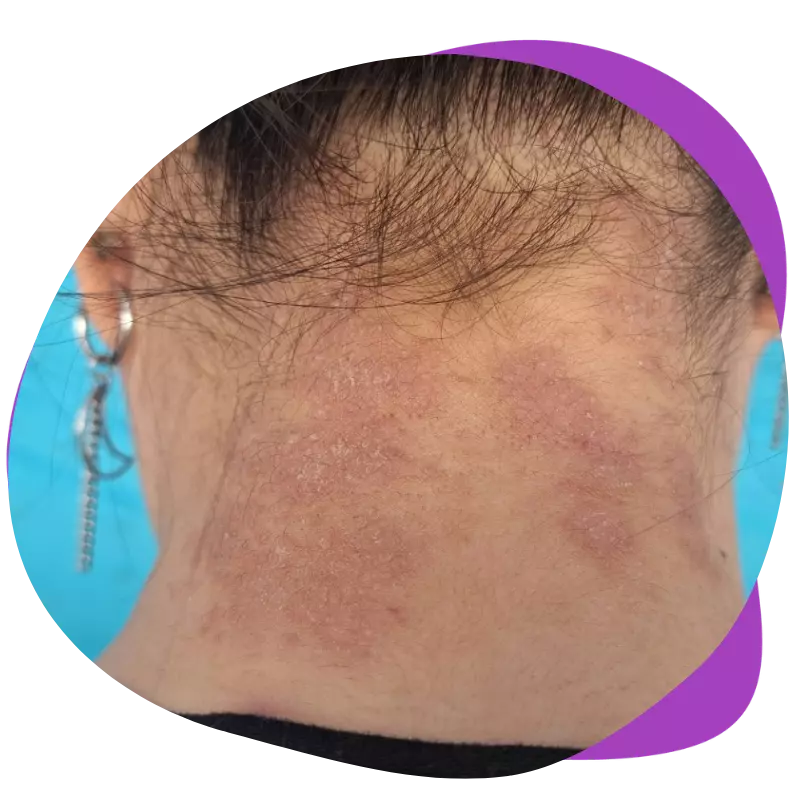 Psoriasis often improves during pregnancy, when estrogen levels are much higher, and may worsen after menopause as estrogen falls.
One possible explanation is that higher estrogen levels can have anti-inflammatory effects, while declining estrogen could make inflammatory activity easier to trigger.
That doesn’t mean low estrogen automatically causes a flare. Researchers are still studying how estrogen and other hormones impact psoriasis.
Menopause Can Make Skin DrierEstrogen helps support collagen and elastin production, skin thickness, and hydration. Low estrogen levels after menopause are associated with impaired skin barrier function. The skin barrier is the outer layer of skin that helps hold moisture in and protect against outside irritants.
Even if you don’t have psoriasis, dry and itchy skin is common during perimenopause and menopause.
Extra dryness can be especially uncomfortable when you already have psoriasis. Psoriatic skin is often dry and easily irritated, and scratching can injure the skin.
Stress and Poor Sleep May ContributeNight sweats and other sleep issues during menopause can make it difficult to get restful sleep. Poor sleep may also affect mood, concentration, and how well you cope with stress during the day.
Stress is also a well-recognized psoriasis trigger. Poor sleep, work demands, changing family responsibilities, or other sources of stress could contribute to a flare even when hormones aren’t the main cause.
Your Usual Psoriasis Triggers Still MatterA flare that happens during menopause isn’t necessarily caused by menopause. Psoriasis triggers vary from person to person and may include:
Consider keeping notes about your psoriasis symptoms alongside sleep, stress, menopause symptoms, medication changes, and other possible triggers. Patterns over time may help you and your dermatologist identify what’s contributing to flares.
You don’t necessarily need a new psoriasis routine just because you’ve entered perimenopause or menopause. However, paying more attention to dryness, triggers, and changes in your symptoms may help you stay comfortable and determine whether your treatment is still working well.
 Give Dry Skin Extra Care
Gentle skin care can help reduce dryness and irritation. The American Academy of Dermatology recommends several strategies for people with psoriasis:
These measures can help protect psoriasis-prone skin from becoming overly dry and irritated.
Make Sleep and Stress Management Part of Your RoutineIf you’re having trouble sleeping, some tips for getting better rest may help:
Managing stress may also benefit your psoriasis. Try to find a stress-management strategy that works for you and practice it regularly. Stress-relieving activities may include:
Regular exercise and relaxing activities may also help with stress during menopause. Cognitive behavioral therapy (CBT), a type of talk therapy, can help with menopause-related sleep problems, low mood, and anxiety.
If sleep problems or stress are affecting your daily life, talk with your healthcare provider about other ways to manage them.
Continue Your Psoriasis TreatmentMenopause itself isn’t a reason to stop a psoriasis treatment that’s working.
Talk with your dermatologist if your psoriasis suddenly becomes harder to manage, plaques spread, or a treatment that used to control your symptoms seems less effective. Don’t stop or change a prescribed psoriasis treatment on your own.
Mention new or worsening joint symptoms too. Joint pain, swelling, tenderness, and stiffness can be symptoms of psoriatic arthritis, an inflammatory condition related to psoriasis. A rheumatologist can evaluate these symptoms and work with your dermatologist if needed.
Hormone replacement therapy (HRT), also called hormone therapy or menopause hormone therapy, is used to treat a variety of menopause symptoms. However, it isn’t a psoriasis treatment, and researchers don’t yet know whether it consistently makes psoriasis better, worse, or neither.
In the 2025 survey mentioned above, 29 participants reported using hormone therapy. About 62 percent of those women said it had no effect on their psoriasis. The small number of women taking it makes firm conclusions difficult.
Other research complicates the picture. A large Korean study of more than 1.1 million postmenopausal women found an association between hormone therapy use and a higher chance of being diagnosed with psoriasis.
This study looked at the development of psoriasis in women who didn’t necessarily already have it, rather than whether hormone therapy causes flares in women living with psoriasis. An association also doesn’t establish that hormone therapy caused psoriasis.
A recent systematic review found that research on hormone therapy and psoriasis remains inconclusive. Different studies have produced different results, and researchers say more work is needed to understand whether specific hormone formulations or other factors matter.
The decision to use hormone therapy should focus primarily on your menopause symptoms, health history, preferences, and individual benefits versus risks, and should be made with a knowledgeable healthcare professional.
If you have psoriasis, make sure the healthcare professional treating your menopause symptoms knows about it and the medicines you take. You can also tell your dermatologist if you start hormone therapy so you can watch for changes in your skin together.
If your psoriasis changes after starting hormones, don’t assume you need to stop it. Talk with your healthcare team about what you’re noticing.
Continue with Facebook
Continue with Email
Continue with Facebook
Continue with Email
Become a member to get even more







Join the conversation
This is a member-feature!
Sign up for free to view article comments.
We'd love to hear from you! Please share your name and email to post and read comments.
You'll also get the latest articles directly to your inbox.