
Making sense of menopause, together.
- Connect with women who get it
- Get expert-reviewed resources
- Learn from real women's experiences
Powered By


 2 Reactions
·
Save
2 Reactions
·
Save
Leg pain may not be as well known as hot flashes, brain fog, night sweats, and other common menopause symptoms. But it can still be frustrating.
A condition called musculoskeletal syndrome may help explain leg pain during perimenopause. It’s linked to aches and pains in the muscles and joints. More than 70 percent of women have symptoms of musculoskeletal syndrome when transitioning from perimenopause to postmenopause.
During perimenopause, hormone levels change. The body makes less estrogen, a hormone that helps support muscles, bones, joints, and other parts of the body.
A drop in estrogen levels can affect many parts of the body, including muscles, joints, and bones. Low estrogen is linked with musculoskeletal syndrome, which includes:
Leg pain varies depending on the cause. Your discomfort may not feel like someone else’s, but below are a few ways people might describe hormone-related leg pain.

A healthcare provider should check pain that’s intense or affects your daily life. Pain that happens with certain movements or activities may be a sign of a joint or muscle injury. Sudden new pain with unusual symptoms, such as swelling, may need medical care right away.
Hormonal changes can affect muscles, bones, and other tissues in many ways. That’s why pinpointing the exact cause of leg pain can be difficult. Below are possible explanations.
Some aches can feel severe, but about 40 percent of women with musculoskeletal syndrome don’t have clear signs of joint or muscle damage.
In other words, doctors may not find anything wrong, like a knee injury. But this doesn’t mean it’s all in your head. High inflammation is linked to joint pain in women going through menopause, even when X-rays or MRIs show nothing.
Research suggests that hormone levels can affect how women feel pain. Scientists don’t know whether low estrogen is linked to higher pain sensitivity. But they agree that stable hormone levels might protect against feelings of pain.
For this reason, women may find sensations more painful than usual during perimenopause. Heat, pressure, and touch can feel especially sensitive during regular experiences, like resting a warm coffee mug on your lap.
Cartilage and muscle protect joints from the stress of everyday activities. Strong, coordinated muscles and healthy cartilage lower stress on the leg joints while walking, running, and squatting.
When these structures are weakened or injured, the knee, hip, and ankle are vulnerable to irritation. Because estrogen is low during perimenopause, muscles recover more slowly.
Breaking a bone is a more severe reason for leg pain. But major trauma isn’t necessary for it to happen.
Women with hormone-related low bone density are at increased risk of fractures, even when falling from standing height. Women with very weak bones can fracture their hips just by twisting the wrong way.
Leg pain in midlife can be caused by factors other than menopause. Some causes need medical care right away.
Hormonal changes during menopause have been linked to cardiovascular (heart and blood vessel) conditions. Also, women who go through menopause at age 45 or younger tend to have more heart and blood circulation issues than women who go through menopause closer to age 50.
Some circulation issues can cause leg pain or discomfort. For example, menopause is linked to unhealthy cholesterol levels, which means the fats in the blood are outside a healthy range.
This imbalance can lead to peripheral artery disease (PAD). PAD may cause leg cramps or discomfort during activity that goes away after resting for a few minutes.
Another related but serious issue is a blood clot. Women taking hormone replacement therapy (HRT) are at a slightly increased risk of blood clotting.
When a blood clot is in the leg (also called deep vein thrombosis or DVT), it may cause symptoms such as: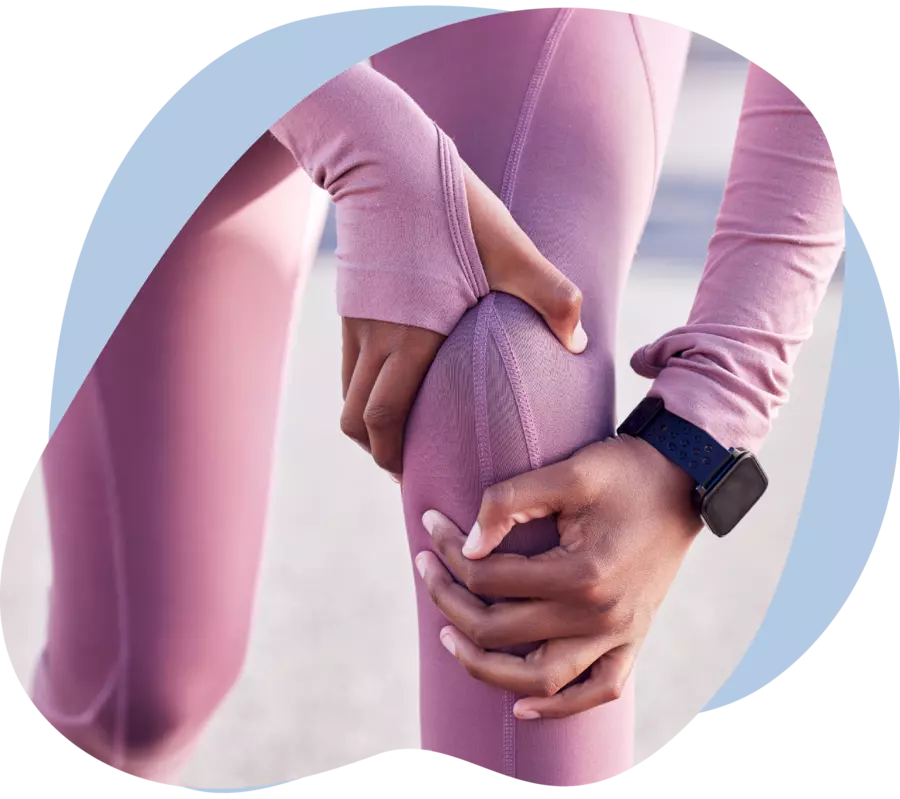
If you have these symptoms, get medical care right away.
Musculoskeletal syndrome can involve other body areas, like the spine. Spine irritation may also irritate nerves. When nerves are irritated, they can send numb, tingling, achy, or shocking sensations into the leg and sometimes down to the foot.
Nerve pain could also be related to type 2 diabetes, a condition caused by uncontrolled blood sugar. Doctors aren’t sure if type 2 diabetes has a direct link to menopause aside from related heart health and lifestyle factors. But they believe the risk of developing diabetic nerve pain increases with age.
Diabetic neuropathy (diabetes-related nerve damage) can cause numbness, tingling, pain, or weakness in the hands, feet, and legs. If you have type 2 diabetes and have leg pain that sounds like neuropathy, contact your doctor to adjust your treatment plan and better control your blood sugar.
Not everyone will have leg pain during perimenopause. These habits may help protect your muscles, bones, and joints:
If you’re concerned you may have an injury or serious condition, or if you’re not sure what’s causing your leg pain, talk to your doctor. They may recommend physical therapy. A physical therapist can check your muscles and joints, treat injuries, and help you stay active safely during perimenopause.
If lifestyle changes aren’t enough, your doctor may suggest other options, such as medications, HRT, or a referral to a specialist. A dietitian may also recommend nutrition changes or supplements if needed. The right care can help you find the cause of your leg pain and feel more comfortable moving again.
 Continue with Facebook
 Continue with Email
Continue with Facebook
Continue with Email
Continue with Email
Continue with Facebook
Continue with Email
Become a member to get even more







Join the conversation
This is a member-feature!
Sign up for free to view article comments.
We'd love to hear from you! Please share your name and email to post and read comments.
You'll also get the latest articles directly to your inbox.