
Making sense of menopause, together.
- Connect with women who get it
- Get expert-reviewed resources
- Learn from real women's experiences
Powered By

You might assume that one benefit of menopause is relief from pelvic pain from endometriosis. For many women, endometriosis symptoms do improve after menopause, but endometriosis can still happen after menopause.
Endometriosis symptoms may continue after menopause, come back after years of relief, or, in rare cases, start for the first time after menopause. Here’s what you need to know about endometriosis after menopause.
 What Is Endometriosis?
Endometriosis is a long-term condition in which tissue similar to the lining of the uterus grows outside the uterus. This tissue can cause:
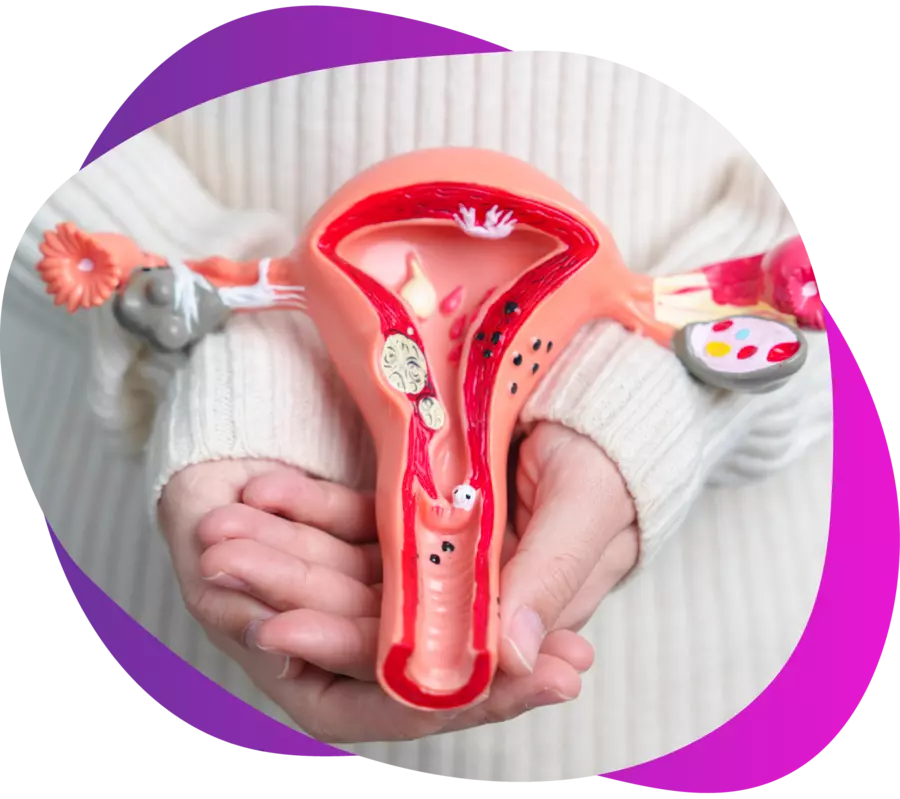
Common places for endometriosis growths include the:
Less commonly, endometriosis may affect the bladder, bowel, diaphragm (the muscle that helps you breathe), or other areas.
Endometriosis affects an estimated 10 percent of women of reproductive age worldwide. It’s most often diagnosed in women in their 20s and 30s.
Endometriosis is often linked to estrogen, a hormone that can help endometriosis tissue grow. After menopause, the ovaries make much less estrogen, which is why symptoms often ease.
Still, the body continues to make small amounts of estrogen, and factors such as hormone replacement therapy (HRT) may affect symptoms.
Pelvic pain is the most common symptom of endometriosis. Before menopause, pain often gets worse before or during a period because hormone changes can increase inflammation.
Some women with endometriosis have no symptoms. Symptoms also don’t always match how much endometriosis there is. A woman with a small amount of endometriosis may have a lot of pain, while another woman with more widespread endometriosis may have few symptoms.
Endometriosis after menopause may not cause the symptoms many women associate with endometriosis, such as period-related pelvic pain or painful menstrual cramps, because menstrual periods have stopped.
After menopause, symptoms may be harder to connect directly to endometriosis. They can overlap with symptoms of other health conditions and may include:
Several conditions can cause symptoms that overlap with endometriosis. That’s one reason it’s important to talk with a doctor to get an accurate diagnosis.
Symptoms that feel like endometriosis may be caused by:
Many women find that endometriosis symptoms improve after menopause.
This improvement doesn’t always happen right away. Perimenopause is the transition to menopause, which can last several years. During this time, estrogen levels can rise and fall, which may make symptoms feel uneven or unpredictable. For some women living with endometriosis, symptoms may continue during this transition.
Menopause means you’ve gone 12 months in a row without a menstrual period. The ovaries produce much less estrogen, and endometriosis often becomes less active.
Yes. If you’ve already had endometriosis, it can continue after menopause, although it’s less common than endometriosis before menopause.
A 2024 review notes that postmenopausal endometriosis can affect up to 4 percent of women, compared with about 10 percent of women of reproductive age.
“My experience is that endometriosis does not go away. I went into menopause at an early age,” one MyEndometriosisTeam member reported. “I still suffered from flare-ups of symptoms from endo and painful intercourse. It never goes away.”
Endometriosis can rarely be diagnosed for the first time after menopause. In some cases, it may be truly new. In other cases, it may have been present before menopause but not diagnosed until symptoms appeared or imaging was performed later.
Like endometriosis before menopause, postmenopausal endometriosis is thought to be influenced by estrogen. Factors that raise estrogen levels or act like estrogen may increase the likelihood of endometriosis symptoms after menopause.
Possible risk factors include:
How Is Endometriosis After Menopause Diagnosed?Diagnosis usually starts with a conversation about symptoms and medical history. Your doctor may ask about:
If endometriosis is suspected, additional testing may be recommended.
A pelvic exam may help your doctor check for tenderness, masses, reduced movement of pelvic organs, or visible signs of endometriosis.
One type of imaging test is a transvaginal ultrasound. During this test, a small probe is placed in the vagina to create pictures of the pelvic organs.
A transvaginal ultrasound is often used to look for:
If a transvaginal ultrasound isn’t suitable, an abdominal pelvic ultrasound may be used.
An MRI may be considered when deep infiltrating endometriosis is suspected, especially if the bowel, bladder, or ureter may be involved. The ureters are tubes that carry urine from the kidneys to the bladder.
Laparoscopy is a surgery that lets a doctor look inside the pelvis with a small camera. A biopsy means removing a small tissue sample to check it under a microscope. In some cases, laparoscopy with biopsy may be used to confirm a diagnosis of endometriosis.
After menopause, doctors may check carefully for other possible causes, including cancer. This doesn’t mean cancer is likely. However, because new pelvic symptoms after menopause can have several possible causes, they deserve careful evaluation.
How Is Endometriosis After Menopause Treated?Treating endometriosis is important because it can affect quality of life. Although there is no cure for endometriosis, treatment may help reduce symptoms and make daily life easier.
Treatment options depend on a person’s:
Surgery is often the preferred first treatment for endometriosis after menopause because it can remove endometriosis tissue, confirm the diagnosis, and help rule out other conditions.
If surgery isn’t a good option, doctors may consider other approaches. These may include:
 Continue with Facebook
 Continue with Email
Continue with Facebook
Continue with Email
Continue with Email
Continue with Facebook
Continue with Email
Become a member to get even more







Join the conversation
This is a member-feature!
Sign up for free to view article comments.
We'd love to hear from you! Please share your name and email to post and read comments.
You'll also get the latest articles directly to your inbox.