
Making sense of menopause, together.
- Connect with women who get it
- Get expert-reviewed resources
- Learn from real women's experiences
Powered By



 5 Reactions
·
Save
5 Reactions
·
Save
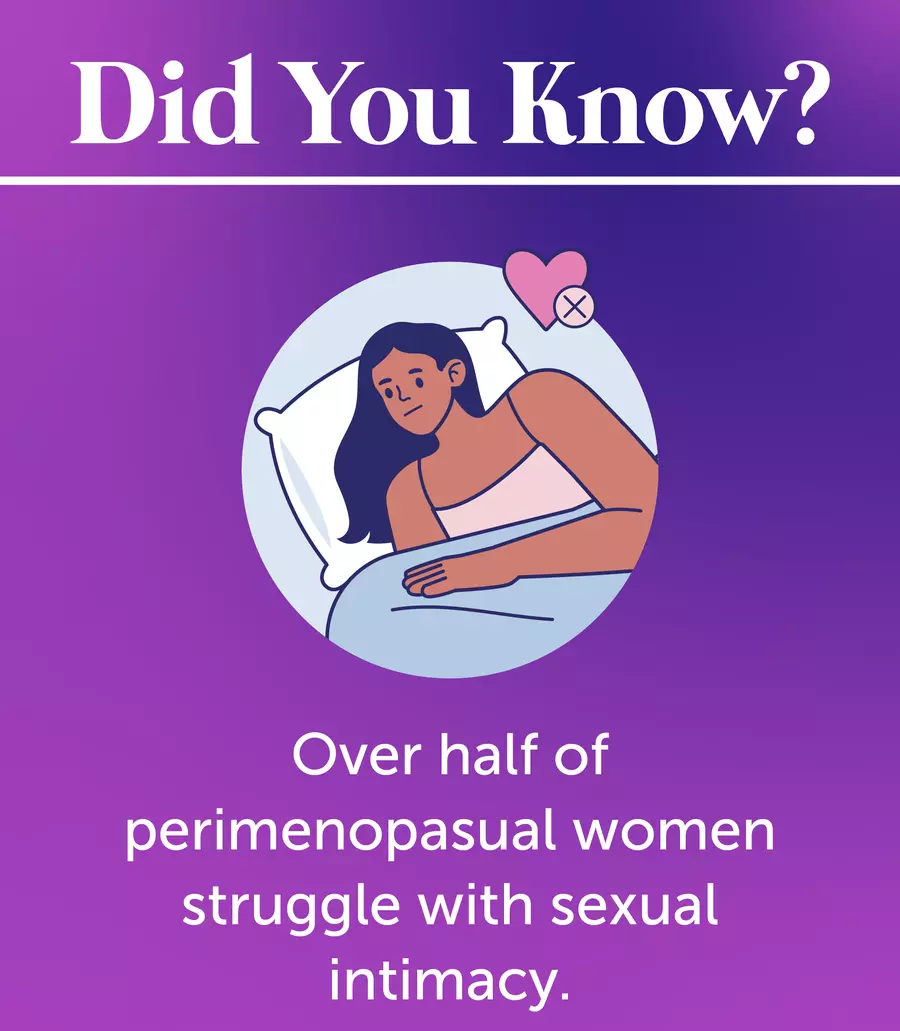
Many women notice changes in their sex drive during perimenopause. You might feel less interested in sex than you were in the past. Or you may still want intimacy but find that your body responds differently than before.
These changes can feel confusing or frustrating. Some women worry something is “wrong” with them. Others feel alone or misunderstood by their partners. Many are too shy or embarrassed to talk to their doctors about decreased libido.
The truth is that libido changes during perimenopause are very common. Factors that can play a role include:
The good news is that there are many ways to improve sexual health and enjoyment.
Read on to learn about the experiences of women surveyed by ThisIsMenopause and what pelvic floor physical therapist Cindi Rauert Lanners has to say about sex drive during perimenopause.
Perimenopause is the transition leading up to menopause, the point in time when you haven’t had a menstrual period in 12 months. During perimenopause, hormone levels change in ways that can affect both the body and brain.
Two hormones are especially important for sexual desire: estrogen and testosterone.
Estrogen supports vaginal health, natural lubrication, and blood flow to the genitals. As estrogen levels fluctuate and decline during perimenopause, some women notice dryness or reduced pleasure.
“Estrogen really plumps up the pelvic floor muscles and plumps up all of the tissue,” said Lanners. “When we start to lose it, we see some changes in that external vulvar tissue. It can also become more sensitive and more painful. That mucosal lining of the tissue can become dry and irritated. And that can impact comfort with sexual activity.”
Testosterone also plays a role in sexual desire in women. Lower levels may contribute to decreased libido in some cases.
Hormones aren’t the only factor, though. Other symptoms of perimenopause can make intimacy more difficult. “It has impacted my moods, my libido, my sleep, and my weight,” said one woman surveyed by ThisIsMenopause.
Many common perimenopause symptoms can affect how someone feels about sex.
These include:
 Vaginal Dryness
Several women who were surveyed said dryness was one of the most surprising changes: “I wish I knew that I would dry out in my vaginal area so much.”
Dryness can make sex uncomfortable and even painful, which can reduce interest in intimacy. Lanners said, “It could also affect intimacy with a partner if you’re like, ‘Ugh, sexual activity is really painful. I don’t want to do that.’”
Sleep disruption can also play a major role in lack of sexual desire. Night sweats and insomnia can leave women feeling exhausted. Naturally, this makes it hard to feel interested in sex.
One woman shared, “I’m hot all the time, I’m grumpy, no libido, sleepless nights. … It’s not been good.”
Another said, “It has affected my sleep and my relationship with my husband.”
Perimenopause can affect mood and emotional well-being. These changes can also influence libido.
Some women experience:
When you’re dealing with stress or mood changes, it can be harder to feel relaxed and connected during intimacy. One woman shared, “It’s extremely difficult sexually.”
Emotional connection and mental health are important parts of sexual desire. If either one is struggling, libido may drop.
Changes in sex drive can affect relationships. Partners may not understand what perimenopause feels like.
At the same time, relationship dynamics and problems, like poor communication, feelings of neglect, and frequent fights, can affect sex drive.
Some women say they feel pressure to maintain the same level of sexual activity as before. Others feel frustrated when partners don’t understand their symptoms. One woman shared, “I’ve tried to explain, but my husband doesn’t really get it.”
Another said, “My relationship was not good. I had no sex drive and when I did, it hurt too much to be penetrated.”
Sometimes, partners have reduced desire or sexual functioning as well. Open communication can help couples navigate these changes together. Understanding that libido shifts are often hormonal, not personal, can make a big difference.
For some women, hormone therapy may improve libido and sexual comfort.
Low-dose topical estrogen cream can help treat dryness and irritation by restoring moisture and elasticity to vaginal tissue. “Topical estrogen cream is what is most helpful when I’m treating the muscles and when we’re really trying to target the urinary symptoms or the loss of muscle mass and bulk in those pelvic floor tissues,” shared Lanners.
Because it is applied locally, topical estrogen cream typically has very low absorption into the bloodstream and is a safe and effective option for most women. However, you should speak with your doctor before you start using it. It can also be used to reduce urinary tract infection risk and treat overactive bladder.
Some doctors prescribe low-dose testosterone creams to help women with low sexual desire related to menopause. Testosterone isn’t approved for women by the U.S. Food and Drug Administration, so this use is considered off-label.
Testosterone therapy is not right for everyone, but it may improve libido for some women.
Systemic hormone therapy using estrogen (sometimes combined with progesterone) may help improve several symptoms that indirectly affect libido, including:
There are also nonhormonal prescription medications that can help treat some sexual problems, including pain during sex and low desire.
Options include oral medications designed to treat symptoms like vaginal dryness or low libido. Speak to your healthcare provider about whether these options are right for you.
Pelvic floor physical therapy is one treatment for sexual dysfunction that many women don’t know about.
According to Lanners, the muscles of the pelvic floor play an important role in sexual function. These muscles support the bladder, uterus, and rectum, and they are involved in arousal and orgasm. When these muscles are weak, tight, or not coordinating well, it can affect sexual comfort and response.
Pelvic floor physical therapy may help with:
Lanners noted, “In physical therapy, we look at, can those muscles contract? Can they lengthen? Are they tender? And does that tissue just need to be stretched or mobilized to bring more blood flow and to make it less painful? We look at each person’s quirks in their pelvic floor, and then we treat their quirks.”
A pelvic floor physical therapist can teach exercises, relaxation techniques, and strategies to improve pelvic health.
Although it’s common to experience libido changes during perimenopause, that doesn’t mean there’s nothing to be done about it. Here are some ways that women going through perimenopause can increase their sexual interest.
Many health experts encourage women in midlife to explore different ways of experiencing pleasure. Sex toys can increase blood flow and stimulation, which may help with arousal and orgasm.
Research has shown that for menopausal women, vibrators can help improve sensitivity, increase arousal, and reduce the time needed to reach orgasm. These tools can also help women reconnect with their bodies during a time of hormonal change.
Vaginal moisturizers and vaginal lubrication can also be used during sex to decrease friction and thereby pain if you have vaginal dryness.
Sex during perimenopause may look different than it did earlier in life. That doesn’t mean intimacy and connection have to disappear.
Some helpful relationship strategies include:
Many couples find that expanding their definition of intimacy, including touch, closeness, and emotional connection, improves their relationship.
Healthy habits can support sexual health during perimenopause.
These include:
Many women feel surprised by how much perimenopause can affect their sex lives.
As one woman shared, “It’s hell. I have no sex drive.”
These experiences are common, and they don’t mean your sex life is over. With the right support, treatment, and communication, many women find new ways to enjoy intimacy during perimenopause and beyond.
As Lanners stressed, “You deserve to ask these questions to be more comfortable, and to not have to put up with painful sexual activity or any other challenge that’s going on.”
If changes in libido are bothering you, consider talking with your healthcare provider. A personalized approach can help you find solutions that work for your body and your life.
 Continue with Facebook
 Continue with Email
Continue with Facebook
Continue with Email
Continue with Email
Continue with Facebook
Continue with Email
Become a member to get even more












Join the conversation
This is a member-feature!
Sign up for free to view article comments.
We'd love to hear from you! Please share your name and email to post and read comments.
You'll also get the latest articles directly to your inbox.